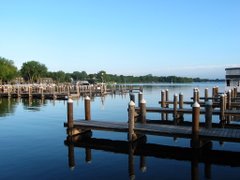
Open water is about a month away and the stage is set. Zebra mussels are coming to Lake Minnetonka – fast.
Zebra mussels in Mille Lacs Lake exploded in 2008. Zebra mussels in Mille Lacs Lake were found at densities of 1 per square foot in 2008 and the DNR expects they will increase to hundreds per square foot this year. Virtually every boat in Mille Lacs Lake will come into contact with zebra mussel and Mille Lacs Lake receives about 400,000 boating visits each year. About 1% of all boats entering Lake Minnetonka come from Mille Lacs Lake.
Lake Minnetonka is inadequately protected, so we consider this an emergency situation. Unless quick and comprehensive steps are taken before the open water season, we believe Lake Minnetonka is at extremely high risk.
The Lake Minnetonka Association has been bringing this issue to the communities’ attention since 2001. We fear, unless quick and decisive action is taken, zebra mussels will soon be in the lake. The results will be devastating. We have developed plans, risk analyses and recommendation for what to do. However, the authority for implementing these actions rests with various other agencies.
Once zebra mussels are in the lake, it will be too late to ask, “Could we have done more?”
Monday, March 23, 2009

Wednesday, February 18, 2009
Inspection Fees
The Lake Minnetonka Association’s Milfoil-Free Minnetonka Vision and Plan recommends inspection fees as one way to help pay for the aquatic invasive species (AIS) protection and control programs we recommend. The access fee issue has raised some healthy discussion. Here I would like to add further clarification.
First of all, the Lake Minnetonka Association believes Lake Minnetonka is a public resource and that no method ought to unreasonably restrict access to this public resource. While fees are a departure from our past practice, we believe we must change the game if we are to protect Lake Minnetonka. We liken these fees to fees required to enter state parks, both would be used to manage and protect the public resource people come to enjoy.
Secondly, I am not aware anyone disagrees with the notion that AIS – those now in Lake Minnetonka or those yet to arrive – pose serious, real and irreversible threats. The potential damage caused by zebra mussels, VHS, spiny waterflea, hydrilla and many more is so great that prevention is the first and sometimes the only line of defense.
Thirdly, we have recommended a comprehensive management and protection program with an annual budget of $600,000 – and the Lake Minnetonka Association has committed to contributing 25% of this. While this may seem to be great, let’s put it into perspective. Lake Minnetonka is large, comprised of dozens of interconnected bays. Therefore, Lake Minnetonka ought to be considered as more than a single, small lake. Lake Manitou (Indiana) spends $500,000 per year to control a single species, hydrilla. Lake Manitou is only 700 acres (Lake Minnetonka is 14,000 acres). Lake Minnetonka has numerous access points, special events and is a regional resource.
Finally, the key element to a comprehensive protection program involves inspections to assure boats and trailers arrive dry inside and out. It has been suggested that AIS could evade inspections, because they are often small or inconspicuous. However, most AIS will not be introduced when there is not water carried from a contaminated lake or river. So, inspections can be effective. Since AIS move by watercraft, the likelihood of an AIS introduction is proportional to the mode of movement. Therefore a fee associated with the boat launching is appropriate.
The Lake Minnetonka Conservation District has released a statement saying “Thus far, the LMCD Board does not support the concept of user fees at public accesses.” In the same statement, the LMCD says they “…will be seeking alternative funding sources…”
The Lake Minnetonka Association notes however, that LMCD Executive Director was recent quoted as saying, “Can more be done? Yes. We are willing to do more. But we have budget constraints.” In addition, the LMCD’s “Management Plan for Lake Minnetonka” includes policies and recommendations for inspections of watercraft at all public and private accesses, and further, they recommend inspections should be paid for by fees assessed to watercraft owners at the time of inspection.
There appears to be no argument that more AIS prevention is needed and that inspections are a key element to that program. At issue is how to fund such a program. Some have argued the state should support these protection activities. However, the reality is the state’s grant program for AIS prevention is $100,000 per year – for the entire state! With these numbers, we are not even in the ballpark to help Lake Minnetonka.
The Lake Minnetonka Association is open to any source of funding that is adequate to protect Lake Minnetonka from AIS. We have considered alternatives and have recommended inspection fees as one source because these are equitable and proportional to how AIS enter lakes. Further, we have recommended that fees collected at Lake Minnetonka be dedicated to protecting Lake Minnetonka.
The Lake Minnetonka Association’s underlying interest is to protect the lake. In that vein, any viable method to accomplish meaningful and comprehensive protection should be on the table. We hope and expect that our proposals will be critically scrutinized and if better alternatives are available to protect Lake Minnetonka, they should be brought forward and considered. Until that time, we are in a situation where there is a recognized and legitimate need for protection and we must find new ways to address that need.
We know that the proposed access fees will be controversial; but inaction or inadequate action is also at issue. The AIS threat will not go away. We believe the inspection fees we propose are justified and appropriate. While this proposal should continue to be discussed, we hope that discussion will occur in the context of the comprehensive vision and plan we have put forward.
First of all, the Lake Minnetonka Association believes Lake Minnetonka is a public resource and that no method ought to unreasonably restrict access to this public resource. While fees are a departure from our past practice, we believe we must change the game if we are to protect Lake Minnetonka. We liken these fees to fees required to enter state parks, both would be used to manage and protect the public resource people come to enjoy.
Secondly, I am not aware anyone disagrees with the notion that AIS – those now in Lake Minnetonka or those yet to arrive – pose serious, real and irreversible threats. The potential damage caused by zebra mussels, VHS, spiny waterflea, hydrilla and many more is so great that prevention is the first and sometimes the only line of defense.
Thirdly, we have recommended a comprehensive management and protection program with an annual budget of $600,000 – and the Lake Minnetonka Association has committed to contributing 25% of this. While this may seem to be great, let’s put it into perspective. Lake Minnetonka is large, comprised of dozens of interconnected bays. Therefore, Lake Minnetonka ought to be considered as more than a single, small lake. Lake Manitou (Indiana) spends $500,000 per year to control a single species, hydrilla. Lake Manitou is only 700 acres (Lake Minnetonka is 14,000 acres). Lake Minnetonka has numerous access points, special events and is a regional resource.
Finally, the key element to a comprehensive protection program involves inspections to assure boats and trailers arrive dry inside and out. It has been suggested that AIS could evade inspections, because they are often small or inconspicuous. However, most AIS will not be introduced when there is not water carried from a contaminated lake or river. So, inspections can be effective. Since AIS move by watercraft, the likelihood of an AIS introduction is proportional to the mode of movement. Therefore a fee associated with the boat launching is appropriate.
The Lake Minnetonka Conservation District has released a statement saying “Thus far, the LMCD Board does not support the concept of user fees at public accesses.” In the same statement, the LMCD says they “…will be seeking alternative funding sources…”
The Lake Minnetonka Association notes however, that LMCD Executive Director was recent quoted as saying, “Can more be done? Yes. We are willing to do more. But we have budget constraints.” In addition, the LMCD’s “Management Plan for Lake Minnetonka” includes policies and recommendations for inspections of watercraft at all public and private accesses, and further, they recommend inspections should be paid for by fees assessed to watercraft owners at the time of inspection.
There appears to be no argument that more AIS prevention is needed and that inspections are a key element to that program. At issue is how to fund such a program. Some have argued the state should support these protection activities. However, the reality is the state’s grant program for AIS prevention is $100,000 per year – for the entire state! With these numbers, we are not even in the ballpark to help Lake Minnetonka.
The Lake Minnetonka Association is open to any source of funding that is adequate to protect Lake Minnetonka from AIS. We have considered alternatives and have recommended inspection fees as one source because these are equitable and proportional to how AIS enter lakes. Further, we have recommended that fees collected at Lake Minnetonka be dedicated to protecting Lake Minnetonka.
The Lake Minnetonka Association’s underlying interest is to protect the lake. In that vein, any viable method to accomplish meaningful and comprehensive protection should be on the table. We hope and expect that our proposals will be critically scrutinized and if better alternatives are available to protect Lake Minnetonka, they should be brought forward and considered. Until that time, we are in a situation where there is a recognized and legitimate need for protection and we must find new ways to address that need.
We know that the proposed access fees will be controversial; but inaction or inadequate action is also at issue. The AIS threat will not go away. We believe the inspection fees we propose are justified and appropriate. While this proposal should continue to be discussed, we hope that discussion will occur in the context of the comprehensive vision and plan we have put forward.
Monday, January 19, 2009
Are the Milfoil Treatments Experimental?
As many know, we are preparing for follow up milfoil treatments in Carmans, Grays and Phelps Bays in 2009. Volunteers on each bay are working with their lakeshore neighbors on fundraising to support the costs of the treatments. The Lake Minnetonka Association is gratified that so many of our members support this worthy project for the betterment of Lake Minnetonka. As in 2008, our members’ voluntary contributions will provide the majority of funding for this project. Other funding will come from the Lake Minnetonka Conservation District’s (LMCD) Save-the-Lake fund, the Minnesota Department of Natural Resources (DNR) and some cities.
The Lake Minnetonka Association’s vision is these treatments will be expanded to include the entire lake and that Lake Minnetonka can be milfoil-free. We have articulated this vision in our “Milfoil-Free Minnetonka Vision and Plan,” which provides a detailed plan to rid the lake of milfoil and keep new exotic pests out of the lake.
As we look forward to implementing and expanding these programs, I want to confront some common misconceptions. This month, I will address whether the milfoil treatments are experimental. They are not.
The milfoil treatments are framed in a Lake Vegetation Management Plan (or LVMP), which has been approved by the DNR. For Lake Minnetonka, the LVMP focuses on the three bays (Carmans, Grays and Phelps) and provides for the expansion into other areas of the lake. A technical committee composed of experts from the DNR, University of Minnesota, US Army Corps of Engineers, Three Rivers Park District and the Lake Minnetonka Association, with additional input from LMCD and Hennepin County, evaluated management methods that would control Eurasian watermilfoil and protect native plants. The committee concluded the use of selective herbicides was the only feasible and safe method. Here, ‘selective’ refers to selectively killing milfoil and not other plants.
The LVMP is a five-year plan for treatments in the three bays, including ongoing evaluation of the results for the purpose of making adjustments from year-to-year. After five years, we expect annual small-scale maintenance treatments will be needed to keep on top of milfoil. The LVMP is neither designed for nor intended to be experimental.
One source of misunderstanding may be the DNR’s funding program that helps support this project. The DNR’s funding program is called the “Pilot Project Grant Program.” That program funds eligible projects, such as the Lake Minnetonka project, for lake-wide or bay-wide milfoil control. The funding program is intended to learn more about how lake-wide controls, which heretofore have not been permitted in Minnesota. The DNR provides minimal oversight, but will use the results to better guide additional projects in Minnesota. Again, not at all ‘experimental.’
‘Experimental’ refers to a scientific method used to test hypotheses and requires a highly controlled environment – obviously not the case for the milfoil control program. The MN DNR and others, including the Lake Minnetonka Association, hope to learn and demonstrate that in addition to controlling milfoil, these treatments will allow the protection and recovery of native plants in the lake.
Treatments such as occurred in 2008 and are planned in 2009 are common across the United States. The particular herbicides have been widely-used and their results are well-understood. Because Lake Minnetonka has unique features and we are not yet able to treat the entire lake, we are ‘tweaking’ the protocol by manipulating the timing, dose and combination of the herbicides to get the most effective result as detailed in the LVMP.
We are confident this approach used in 2008 and planned in 2009 with minor modification will accomplish our shared objective of ridding these bays and ultimately the entire lake of milfoil and restoring a healthy native plant assemblage.
Milfoil has been the top concern and complaint we have heard over the past decade. This tells us we are on the right track.
The Lake Minnetonka Association’s vision is these treatments will be expanded to include the entire lake and that Lake Minnetonka can be milfoil-free. We have articulated this vision in our “Milfoil-Free Minnetonka Vision and Plan,” which provides a detailed plan to rid the lake of milfoil and keep new exotic pests out of the lake.
As we look forward to implementing and expanding these programs, I want to confront some common misconceptions. This month, I will address whether the milfoil treatments are experimental. They are not.
The milfoil treatments are framed in a Lake Vegetation Management Plan (or LVMP), which has been approved by the DNR. For Lake Minnetonka, the LVMP focuses on the three bays (Carmans, Grays and Phelps) and provides for the expansion into other areas of the lake. A technical committee composed of experts from the DNR, University of Minnesota, US Army Corps of Engineers, Three Rivers Park District and the Lake Minnetonka Association, with additional input from LMCD and Hennepin County, evaluated management methods that would control Eurasian watermilfoil and protect native plants. The committee concluded the use of selective herbicides was the only feasible and safe method. Here, ‘selective’ refers to selectively killing milfoil and not other plants.
The LVMP is a five-year plan for treatments in the three bays, including ongoing evaluation of the results for the purpose of making adjustments from year-to-year. After five years, we expect annual small-scale maintenance treatments will be needed to keep on top of milfoil. The LVMP is neither designed for nor intended to be experimental.
One source of misunderstanding may be the DNR’s funding program that helps support this project. The DNR’s funding program is called the “Pilot Project Grant Program.” That program funds eligible projects, such as the Lake Minnetonka project, for lake-wide or bay-wide milfoil control. The funding program is intended to learn more about how lake-wide controls, which heretofore have not been permitted in Minnesota. The DNR provides minimal oversight, but will use the results to better guide additional projects in Minnesota. Again, not at all ‘experimental.’
‘Experimental’ refers to a scientific method used to test hypotheses and requires a highly controlled environment – obviously not the case for the milfoil control program. The MN DNR and others, including the Lake Minnetonka Association, hope to learn and demonstrate that in addition to controlling milfoil, these treatments will allow the protection and recovery of native plants in the lake.
Treatments such as occurred in 2008 and are planned in 2009 are common across the United States. The particular herbicides have been widely-used and their results are well-understood. Because Lake Minnetonka has unique features and we are not yet able to treat the entire lake, we are ‘tweaking’ the protocol by manipulating the timing, dose and combination of the herbicides to get the most effective result as detailed in the LVMP.
We are confident this approach used in 2008 and planned in 2009 with minor modification will accomplish our shared objective of ridding these bays and ultimately the entire lake of milfoil and restoring a healthy native plant assemblage.
Milfoil has been the top concern and complaint we have heard over the past decade. This tells us we are on the right track.
Tuesday, December 16, 2008
Changing the Game
This month, I will talk about the regulatory and cultural framework that has allowed aquatic invasive species (AIS) to move to and from lakes in Minnesota and elsewhere. Simply, Minnesotans have enjoyed our bountiful lakes and rivers and have had the ability to move among them unfettered. Unfortunately, AIS are exploiting these vectors by hitchhiking on boats and trailers – this is the main way AIS are moved from lake to lake. There is certainly a long tradition of and appreciation for this ability to enjoy our lakes, but it is time to re-examine this in light of these unwanted hitchhikers and the permanent damage they cause.
We cannot solve the AIS problem within the same framework that created it.
The Lake Minnetonka Association has developed a plan and vision embodied in our Milfoil-Free Minnetonka campaign. This plan contains recommendations for re-organizing agencies’ roles and specific funding mechanisms that ‘change the game’ in a way that we believe can keep unwanted AIS at bay and therefore protect our beautiful lake.
We have identified a need for an AIS management budget for Lake Minnetonka of at least $600,000 per year. This compares with current spending of about one third that amount. While $600,000 may seem high, our analysis shows this amount is appropriate for the need. Further, there are many examples of lake management efforts around the country that spend 10- and 20-times this amount on a per acre basis.
Where should we seek this additional money?
We recommend this money should come from or through the Lake Minnetonka Conservation District, the agency specifically empowered to protect Lake Minnetonka. The majority of new funding (75%) should come from an increased levy, access fees and the private Save-the Lake fund and remainder (25%) the Lake Minnetonka Association (25%).
Here is our rationale. The LMCD is charged with managing Lake Minnetonka for many things, including AIS. However, they have a cap on their funding levy, which critically impairs their ability to protect the lake. We have also heard from many member Cities that they should not be called upon to provide funding directly from their budgets; rather this is better managed by the LMCD. Thus, we are recommending a statute amendment that would raise the LMCD’s levy limit to provide for additional AIS funding. We also recommend a system of charging fees at accesses to supplement the LMCD’s AIS budget, believing this to be a fair and proportionate method for protecting the lake. This is done elsewhere and can be done in a way that does not unreasonably restrict public access. We also know from the Three Bay project that lakeshore residents will step up and voluntarily fund this important work. So, the Lake Minnetonka Association should also contribute funds. There may be other agencies or entities better suited to implementing this ambitious plan and these should be considered to assure Lake Minnetonka is best protected.
Our specific recommendations and complete plan will be available on our website soon.
While the AIS problem pervades many levels – local, state, regional, national - we believe the responsibility for protecting Lake Minnetonka must arise and be supported locally. As a practical matter, there is no really other alternative. Right now, the Minnesota’s state grant program for AIS control and protection is less than the $600,000 per year we have identified as the need for just Lake Minnetonka.
If we do not change the game, we cannot protect Lake Minnetonka.
Lake Minnetonka in 500 Years
At the Minnesota Invasive Species Conference last month, I was chatting with a colleague from Wisconsin about aquatic invasive species (AIS) concerns in Lake Minnetonka. We were talking about immediate concerns – many of which I have illustrated in this column – and he asked me “what do you think Lake Minnetonka will be like in 500 years?” His point was, we sometimes get too close to our topic, so taking a longer perspective can be useful.
Here I will give my thoughts about what Lake Minnetonka will look like in 5, 50 and 500 years – in other words the near future, over a career or about two generations and a long time from now.
With respect to AIS concern in Lake Minnetonka, I have argued that we have two immediate concerns – we can and should do more to control AIS now in the lake and we are woefully underprepared and under-protected to keep new AIS from getting into the lake. I have focused on a very short planning horizon, which arguably makes sense since many AIS are at our doorstep.
I have reasonably well covered the 5-year horizon already in this column. Briefly, through our Three Bay milfoil control project and our Milfoil-Free Minnetonka campaign, we have developed plans, and have begun to implement some of them. We have also pointed out where there are deficiencies in our actions and have identified plans, program, policies or practices to address these. Simply, the vision of the Lake Minnetonka Association is to make Lake Minnetonka milfoil (and AIS) free.
I see that in 50 years, Lake Minnetonka could go in one of two directions. If we take the AIS threat seriously and make investments in protection and control efforts, I think we can keep many potential new AIS out of the lake, we can keep milfoil and curlyleaf pondweed in check and keep Lake Minnetonka healthy. This squares with the vision of the Lake Minnetonka Association.
If do not take the threat of AIS seriously and do not make concomitant investments and policy changes, I think there will be dozens of new AIS in the lake, which singly and in combination, will have serious adverse impacts on the lake’s fishery, water quality and overall health. This will profoundly affect the beauty and recreational enjoyment of the lake.
It is a stretch to think out to 500 years. Yikes, it has been 500 years since Columbus’ voyage. Given that the nature and magnitude of changes has been and will continue to accelerate, this is an incredible time span to contemplate. I think regardless of what we do today or even in 50 years, AIS will become a cosmopolitan issue that will have likely played itself to some logical endpoint. As well, technologies for controlling or mitigating adverse effects will likely be developed so we can better manage and cope. History shows there is indeed a rational basis to expect optimism – life spans continue to increase, health is better, we are more productive, etc. There are certainly problems, but as a society we are much better off on most ways compared to 500 years ago – although I am not sure being tethered to my cell phone is always a good thing.
What we really ought to be concerned about and focused on then, should be a planning horizon spanning to at least the next 50 years. In that context, we have immediate and mid-range concerns that, in the view of the Lake Minnetonka Association, require serious attention and investment – the sooner the better. Lacking this attention, we fear Lake Minnetonka’s value to the community will be diminished for the foreseeable future.
Lake Minnetonka - The Real Jewel
Lake Tahoe is a jewel. The community around Lake Tahoe is so concerned about zebra mussels they have recently enacted strict measures to assure Lake Tahoe remains a jewel.
According to a September 26, 2008 press release from the Tahoe Regional Planning Commission, new boat rules will take effect on November 1st (Tahoe does not get ice in the winter). These rules “… require boats be launched at facilities where qualified aquatic invasive species inspectors are present …” and also require “… that vessels launching at the lake be decontaminated …”. The goal is to “inspect every boat that enters the lakes of the Tahoe Basin.” The Commission is discussing fees at the boat ramps to pay for this program.
When a community believes a resource like Lake Tahoe is a jewel, they will take actions, even draconian actions, to protect that resource.
There are no comparable requirements for Lake Minnetonka even though zebra mussels (and several other damaging aquatic invasive species or AIS) are threatening.
I believe Lake Minnetonka is a jewel for our community, indeed for the entire state. Why have we not taken the necessary actions to assure its protection?
It is time we take the threat of zebra mussels and other aquatic invasive species that threaten our lake seriously. I have spent the past couple months visiting with mayors, city councils and other elected representatives around the lake to discuss the institutional framework for providing appropriate protection from zebra mussel and other AIS. All agree that AIS, both in the lake and coming to the lake, ought to be taken seriously because they do or will cause damage. However, when it comes to the question of who should implement or pay for protection and control programs, the conversations break down.
Make no mistake – adequate and appropriate protection and control measures will require changes in attitudes and culture and will be costly. However, inaction or apathy are also costly and are not a rational game plan.
The Lake Minnetonka Association has proposed and recommended comprehensive inspections around the lake and in tributary lakes. We have recommended closing some accesses at some times to facilitate inspections and we have proposed assessing fees as a fair and appropriate way to fund protection activities specific to Lake Minnetonka. To get traction on real protection actions, we must have leadership and new thinking as well as a willingness to coordinate these activities. All agencies are rightfully aware of and concerned about being fiscally responsible, especially in this weak economy. However, substantially all of the funding for the actions we are recommending could actually come from user fees. We know that user fees and access inspections will be unpopular, but we believe these are fair and proportionate with respect to the nature of the threat.
If we rely on existing funding sources and authorities, we will fall short. The state of Minnesota collects a boat license surcharge ($5 for a three year license). This plus some money from the general fund gives the DNR AIS program $3.9 million per year. Of that, only $100,000 (less than 3%) comes back to local communities for AIS prevention grants across the state. Similarly, the Lake Minnetonka Conservation District directs a portion of its funding to AIS programs, the harvesting program and the inspection program, which represent about $110,000 and $45,000 per year (respectively) and they receive money from the DNR (for harvesting) and from their private Save-the-Lake Fund (for inspections) to offset these costs.
Some have suggested the constitutional amendment that would dedicate 3/8 percent of sales tax toward environmental and arts programs offers a new source of funding for AIS. However, the language authorizing the amendment would not provide for AIS-related, rather of other water programs.
AIS prevention programs to adequately protect Lake Minnetonka will cost much more than is now available. Both the DNR and LMCD funds are effectively capped unless significant changes in statute or funding occur outside their respective internal controls. Again, we think that user fees are an appropriate source of new funding.
Lake Minnetonka is a jewel and our leaders’ actions should demonstrate that by supporting creative and appropriate protections and getting together to address this large problem.
Three Bay Milfoil Treatment - What Next?
With the summer season nearly over, we have had a chance to evaluate the results of the Three Bay milfoil treatments (Carmans, Grays and Phelps), take what we have learned and consider continued treatments in 2009.
While the treatments did not have the results we expected, there were positive results. Recall the objectives of these treatments were to control milfoil, preemptively control curlyleaf pondweed (another exotic plant), protect and restore native plants and minimize lakeshore clean up of milfoil fragments that wash ashore. However, the objective at the forefront of most people’s minds is to control milfoil.
The results varied. The results on Grays Bay were the best. Milfoil did not form mats and the bay was open for water recreation all summer. In fact, I even saw people swimming by the highway 101 causeway this summer. – something that had been impossible in past years Milfoil has grown back late in the season. Carmans Bay results were the poorest, as there was little milfoil control throughout the bay. However, except for a few areas, milfoil did not mat in Carmans Bay and residents reported higher recreational activities compared to past years. Phelps Bay results were mixed – good milfoil control on the north end of the bay and poor control near Enchanted Island. However, the applicator and manufacturer of the herbicide provided warranty treatments in nine acres (at no cost to the project) and this provided good control in those areas.
Curlyleaf pondweed has not become a problem, we have no evidence of damage to native plants and we have had residents report greatly diminished shoreline cleanup chores this season.
The Lake Minnetonka Association invited manufacturer’s representatives to help the technical committee evaluate the results and assist in recommending modifications to the treatment approaches in 2009. We have learned there was significant dilution of the liquid product in 2008, which led to inadequate contact time of the herbicide and therefore less milfoil control than expected. Based on similar treatments in other lakes, this was not expected. The manufacture and applicators will be working with the technical committee to adjust the treatment protocol and they have agreed to provide assurances the modified protocols will provide long-term milfoil control as well as meet the other program objectives.
The Lake Minnetonka Association and the project team has learned a lot during this first year and we believe the refinements that will be proposed for 2009 will be significantly more effective. The Lake Minnetonka Association remains unwavering in our view that using selective herbicides will ultimately be the most effective tool for lake-wide milfoil control and an important element in our Milfoil-Free Minnetonka vision.
Representatives from the Three Bays are now working with the Lake Minnetonka Association in fundraising efforts to support the 2009 treatments.
In related developments, we have recommended these treatments be expanded to other bays. Because this year’s results were not what we expected, the technical committee has recommended that expansions beyond the Three Bays not occur in 2009. The Lake Minnetonka Association agrees this is the proper approach. We have had interest in future expansions from representatives of several other bays, including Gideons, St. Albans, Libbs Lake and Carsons Bays, and we will continue to work with these bays.
The Lake Minnetonka Association also sponsored a forum of other Minnesota lake associations who are dealing with milfoil management. These associations are experiencing similar challenges and frustrations as Lake Minnetonka and we had a productive meeting. I am gratified the Lake Minnetonka Association and our members support our leadership in the area of milfoil control and we are looking forward to continued progress in 2009 and beyond.
Subscribe to:
Posts (Atom)