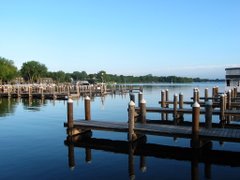
The problems are: a) aquatic invasive species (AIS) hitchhike on boats and trailers and exploit new ecosystems where they are introduced, b) there is not a widespread appreciation that AIS are harmful, c) we have a culture and worldview that cannot adequately reconcile that easy and unimpeded access to and between lakes is exactly the pathway that AIS best exploit.
Unless we are collectively willing to confront these problems, new invasive plants, animals and viruses will continue to infest and damage our lakes.
AIS are harmful.
Recent reports from Prior Lake show the explosion in zebra mussels, only one year after they were discovered. Zebra mussels in Prior Lake are encrusting docks, lifts and boats as well as clogging water irrigation and boat engine cooling intakes. We also expect impacts to the lake’s ecology.
In another example, as Eurasian watermilfoil in Christmas Lake has increased, eight species of native plants have decreased.
Once we recognize that AIS really are harmful, we must confront the reality that preventing their movement requires changes in behaviors, attitudes and values - a significant cultural shift in thinking and behaving. It is human nature to wish away a problem rather than to confront it. We lack clear leadership to recognize and confront the AIS problem facing our lakes.
Even after lakes become infested, there is a tendency toward minimization, rationalization and denial. Last year, just after the discovery of zebra mussels in Prior Lake, I spoke with a homeowner to gauge their level of concern. They were not so concerned because they did not even see the zebra mussels in the lake - and they had been told that zebra mussels could even be fish food. Zebra mussels are certainly not fish food and unfortunately, we now know that zebra mussels are exploding in Prior Lake. I am afraid Lake Minnetonka faces the same fate.
We must take the AIS threats seriously and take aggressive prevention actions if we value our lakes.
We have become complacent, thinking that we are doing enough. Our protection system is largely permissive and a significant number of boaters are not even complying with current laws. The Minnesota DNR reports that extra efforts have occurred this year, especially at newly infested lakes. Intensive education, enforcement and inspections have logged 6,800 contacts at boat ramps and of these they issued over 320 warnings and about 120 citations – indicating that there is over 6% noncompliance with state laws, and that is with DNR uniformed personnel present. My personal observations on Lake Minnetonka indicate this rate of noncompliance is much higher, especially when inspectors are not present.
A large number of boaters are indeed aware of and in compliance with our AIS laws – thank you. Unfortunately, given the millions of boater trips that occur between Minnesota lakes, even a small percentage of noncompliant boaters translates into a very large risk of moving AIS.
We need even more funding, stronger laws, more enforcement and stiffer penalties. We need to take the AIS threat seriously.
We also need to profile and prioritize are prevention program.
As of this season, there are now four ‘superspreader’ lakes in Minnesota (Alexandria chain, Gull, Mille Lacs and Minnetonka) for zebra mussels. These lakes have (or soon will have) high densities of zebra mussels and large volumes of boat traffic. While increased protection efforts have occurred, they are unfortunately, still too small an effort.
Fishing tournaments and tournament participants represent a high risk category. I do not think it is a coincidence that five of the six most recently infested zebra mussel lakes (Alexandria chain, Gull, Mille Lacs, Pelican and Minnetonka) are all in the highest prize category (greater than $10,000) of permitted fishing contests in Minnesota. These lakes are also very highly visited, but many other highly visited lakes do not have zebra mussel.
I often hear criticisms of the MN DNR when the topic of protecting our lakes from AIS arises. In my experience, the DNR staff are professionals and are doing the best job possible with preventing AIS impacts, given the funding and policy constraints they must work within.
We need to ask – no expect – our elected leaders to give the DNR more resources and clear policy direction to really protect our lakes.
Tuesday, October 19, 2010

Monday, September 20, 2010
What Next?
Now that zebra mussels are in Lake Minnetonka to stay, we will have to learn to cope with their impacts. We have an opportunity to learn from this and make adjustments to keep new and forthcoming other aquatic invasive species (AIS) out of Lake Minnetonka. Unfortunately, zebra mussels will not be the last AIS to threaten Lake Minnetonka.
The nature of the AIS issue makes this a large challenge on many levels, but a challenge we ought to confront.
The Lake Minnetonka Association has been urging protection against zebra mussel for about ten years. Perhaps by using zebra mussel as our poster AIS, we have not given enough emphasis to other AIS nearing Lake Minnetonka. We cannot afford to let down our guard because new AIS, such as hydrilla, spiny waterflea, VHS and many more, all will damage our lake should they get in.
We have learned that current protections – local and statewide are not adequate.
According to a position paper from Minnesota Waters, a statewide advocacy organization, “ Minnesota’s response to the AIS problem has evolved over the past two decades in a piecemeal fashion. As a result, we lack a comprehensive management system, and we lack a sense of urgency.” And “We need to change the game.”
An effective AIS protection system requires both statewide and local elements.
The protections now in place are largely permissive, relying on public awareness and voluntary actions. There are laws, which are enforced somewhat, but not nearly enough. At the local level, there have been ramped up inspection efforts, but these too have not been sufficient. For example, the LMCD’s Strategic Plan says 19,000 inspection hours (per season) are needed. This season, there were approximately 4,000 hours of inspections.
The Minnesota Department of Natural Resources is hosting a series of stakeholder meetings this Autumn and the Lake Minnetonka Association has been invited to participate. A similar series of meetings occurred last year and one outcome was the new law requiring all boats to drain their water reservoirs after leaving any lake or river. Additional steps must be taken soon and our hope is these will be embraced in the upcoming legislative session.
We must recognize however, additional protection measures may be controversial or face obstacles. New funding of any kind will pose challenges in this economic climate. The Lake Minnetonka Association supports a fee system like that in place on Lake Tahoe, where boaters pay fees on two tiers – those using only Lake Tahoe and those visiting other lakes. These fees pay for inspections. For Minnesota, a version of this two-tier boat license system is being considered by the Minnehaha Creek Watershed District for possible introduction to the state legislature.
Another challenge we will encounter is there are angling and boating interests who may object to the cultural changes embodied by a more comprehensive protection system. Many individuals and groups have expressed concerns regarding the increased intrusiveness of additional laws, fees or inspections. These groups will be represented in the DNR’s stakeholder meetings and we will work to reach common understandings of the AIS challenges and impacts so we can come to consensus regarding meaningful and effective protections while allowing all Minnesotans to enjoy our lakes.
Given that several dozen new AIS have been identified by the DNR as having potential to impact Minnesota lakes, we must not let down our guard.
To do this, we must develop:
• Comprehensive protection with both state and local elements
• A systemic overhaul, rather than incremental changes
• An attitude and culture that AIS pose serious, permanent threats that must be addressed
• All Minnesotans being invested in the protection of our lakes
The Lake Minnetonka Association believes that if our local and state leaders can get on board with these guiding principles, then the details will follow. The Lake Minnetonka Association, partnering with Minnesota Waters and local leaders is prepared to offer specific recommendations.
The nature of the AIS issue makes this a large challenge on many levels, but a challenge we ought to confront.
The Lake Minnetonka Association has been urging protection against zebra mussel for about ten years. Perhaps by using zebra mussel as our poster AIS, we have not given enough emphasis to other AIS nearing Lake Minnetonka. We cannot afford to let down our guard because new AIS, such as hydrilla, spiny waterflea, VHS and many more, all will damage our lake should they get in.
We have learned that current protections – local and statewide are not adequate.
According to a position paper from Minnesota Waters, a statewide advocacy organization, “ Minnesota’s response to the AIS problem has evolved over the past two decades in a piecemeal fashion. As a result, we lack a comprehensive management system, and we lack a sense of urgency.” And “We need to change the game.”
An effective AIS protection system requires both statewide and local elements.
The protections now in place are largely permissive, relying on public awareness and voluntary actions. There are laws, which are enforced somewhat, but not nearly enough. At the local level, there have been ramped up inspection efforts, but these too have not been sufficient. For example, the LMCD’s Strategic Plan says 19,000 inspection hours (per season) are needed. This season, there were approximately 4,000 hours of inspections.
The Minnesota Department of Natural Resources is hosting a series of stakeholder meetings this Autumn and the Lake Minnetonka Association has been invited to participate. A similar series of meetings occurred last year and one outcome was the new law requiring all boats to drain their water reservoirs after leaving any lake or river. Additional steps must be taken soon and our hope is these will be embraced in the upcoming legislative session.
We must recognize however, additional protection measures may be controversial or face obstacles. New funding of any kind will pose challenges in this economic climate. The Lake Minnetonka Association supports a fee system like that in place on Lake Tahoe, where boaters pay fees on two tiers – those using only Lake Tahoe and those visiting other lakes. These fees pay for inspections. For Minnesota, a version of this two-tier boat license system is being considered by the Minnehaha Creek Watershed District for possible introduction to the state legislature.
Another challenge we will encounter is there are angling and boating interests who may object to the cultural changes embodied by a more comprehensive protection system. Many individuals and groups have expressed concerns regarding the increased intrusiveness of additional laws, fees or inspections. These groups will be represented in the DNR’s stakeholder meetings and we will work to reach common understandings of the AIS challenges and impacts so we can come to consensus regarding meaningful and effective protections while allowing all Minnesotans to enjoy our lakes.
Given that several dozen new AIS have been identified by the DNR as having potential to impact Minnesota lakes, we must not let down our guard.
To do this, we must develop:
• Comprehensive protection with both state and local elements
• A systemic overhaul, rather than incremental changes
• An attitude and culture that AIS pose serious, permanent threats that must be addressed
• All Minnesotans being invested in the protection of our lakes
The Lake Minnetonka Association believes that if our local and state leaders can get on board with these guiding principles, then the details will follow. The Lake Minnetonka Association, partnering with Minnesota Waters and local leaders is prepared to offer specific recommendations.
Saturday, August 7, 2010
Sad News - Zebra Mussels in Our Lake - What Do We Need to Know and What should We Be Doing Now?
Everybody by now probably knows that zebra mussels have been found in Lake Minnetonka. I and everybody else who loves Lake Minnetonka hoped this day would never come. It is truly sad news for everyone. But, now that they are here, what next?
As of now, it appears the infestation is limited to Grays and Wayzata Bay and the Lower Lake south to Big Island. All appearances are that we are very early in the infestation. Crews from the Minnesota Department of Natural Resources and the Minnehaha Creek Watershed District have and will continue to monitor the lake and more up-to-date information will be available in the weeks to come. The DNR will have a special page on their website dedicated to the Lake Minnetonka zebra mussel situation 9search ‘zebra mussel’).
Also as of this time, the agencies are exploring whether any kind of containment may be possible. The Lake Minnetonka Association will work with the agencies to explore all options. Again, more information will be forthcoming in the next month or two.
Typically, zebra mussel populations expand very slowly for the first two or three years, then multiply explosively.
Given this assessment and the way zebra mussel populations typically expand, I would expect the full impacts may take two to four years to be realized.
Zebra mussels will encrust hard surfaces – hard or firm lake bottoms, boat hulls, mooring buoys, inside mechanisms in boat motors, water toys, docks and lifts. Here are some precautions that should be taken.
At the end of the day, unfortunately, zebra mussels will be in Lake Minnetonka forever. So, we must learn to cope with them.
What should boaters and lakeshore owners do?
1. When swimming or wading, wear protective footwear to minimize cutting your feet, as zebra mussel shells are razor-sharp.
2. Remove irrigation intakes from the water and drain completely when not in use, as the immature forms will encrust the intakes and pipes.
3. If possible, keep your boat and motor completely out of water (when not in use) to minimize the encrustation of zebra mussels.
4. If it is not possible to store your boat out of water, contact a marina to inquire about protective paints and annual maintenance.
5. Run you boats long enough to reach operating temperatures. The immature zebra mussels are very sensitive to heat, so a hot engine will kill them as they are flushed through the cooling system. Drain all water reservoirs after each use.
6. Help prevent the spread to other lakes and rivers. If you take your boat out of Lake Minnetonka, thoroughly clean your boat and trailer inside and out and let it dry for at least five days. Scrape off any encrustations, wash with high pressure, hot water (120 degrees), then drain and dry all water reservoirs.
7. If you sell used docks, structures or water toys, be sure they are decontaminated and cleaned before they leave the area.
We expect zebra mussels will affect the overall health of the lake and the fisheries. As the infestation develops, agencies charged with managing Lake Minnetonka’s environmental health – MN DNR and the Minnehaha Creek Watershed District - will be reporting to the community.
I am saddened by this news, as I know all of you are as well. The Lake Minnetonka Association remains committed to being advocates for AIS prevention. While zebra mussels are here, there are dozens of other invasive plants, animals and pathogens coming toward of Lake Minnetonka.
As of now, it appears the infestation is limited to Grays and Wayzata Bay and the Lower Lake south to Big Island. All appearances are that we are very early in the infestation. Crews from the Minnesota Department of Natural Resources and the Minnehaha Creek Watershed District have and will continue to monitor the lake and more up-to-date information will be available in the weeks to come. The DNR will have a special page on their website dedicated to the Lake Minnetonka zebra mussel situation 9search ‘zebra mussel’).
Also as of this time, the agencies are exploring whether any kind of containment may be possible. The Lake Minnetonka Association will work with the agencies to explore all options. Again, more information will be forthcoming in the next month or two.
Typically, zebra mussel populations expand very slowly for the first two or three years, then multiply explosively.
Given this assessment and the way zebra mussel populations typically expand, I would expect the full impacts may take two to four years to be realized.
Zebra mussels will encrust hard surfaces – hard or firm lake bottoms, boat hulls, mooring buoys, inside mechanisms in boat motors, water toys, docks and lifts. Here are some precautions that should be taken.
At the end of the day, unfortunately, zebra mussels will be in Lake Minnetonka forever. So, we must learn to cope with them.
What should boaters and lakeshore owners do?
1. When swimming or wading, wear protective footwear to minimize cutting your feet, as zebra mussel shells are razor-sharp.
2. Remove irrigation intakes from the water and drain completely when not in use, as the immature forms will encrust the intakes and pipes.
3. If possible, keep your boat and motor completely out of water (when not in use) to minimize the encrustation of zebra mussels.
4. If it is not possible to store your boat out of water, contact a marina to inquire about protective paints and annual maintenance.
5. Run you boats long enough to reach operating temperatures. The immature zebra mussels are very sensitive to heat, so a hot engine will kill them as they are flushed through the cooling system. Drain all water reservoirs after each use.
6. Help prevent the spread to other lakes and rivers. If you take your boat out of Lake Minnetonka, thoroughly clean your boat and trailer inside and out and let it dry for at least five days. Scrape off any encrustations, wash with high pressure, hot water (120 degrees), then drain and dry all water reservoirs.
7. If you sell used docks, structures or water toys, be sure they are decontaminated and cleaned before they leave the area.
We expect zebra mussels will affect the overall health of the lake and the fisheries. As the infestation develops, agencies charged with managing Lake Minnetonka’s environmental health – MN DNR and the Minnehaha Creek Watershed District - will be reporting to the community.
I am saddened by this news, as I know all of you are as well. The Lake Minnetonka Association remains committed to being advocates for AIS prevention. While zebra mussels are here, there are dozens of other invasive plants, animals and pathogens coming toward of Lake Minnetonka.
Monday, July 19, 2010
Milfoil is Bad - Really
We have been starting to hear from the Minnesota Department of Natural Resources that milfoil can be good for lakes. Over the past month, I have heard and seen in various media that milfoil may be good fish habitat, milfoil may help to keep suspended sediments out of lakes, and milfoil may help keep lakes clear. I have also heard that overly aggressive control may do more harm than good.
There may be some truth to these statements in a very narrow context, but mostly milfoil is bad for lakes.
The DNR is concerned about protecting the health and integrity of lakes – we all are. However, when these concerns are framed inappropriately, they may be misleading. While milfoil control is high on Lake Minnetonka’s radar screen and keeping the lake healthy is in everyone’s interest, I think it is time to step back and examine these concerns.
The various statements from the DNR are true, but only in extreme cases. For example, milfoil is good fish habitat – but only when there are no other native plants in the lake. That is not the case in Lake Minnetonka. Lakes can become turbid and clouded with suspended sediment and algae, but this has only been observed in lakes where all plants have been removed, which has happened in only one or two lakes. That has not happened in Lake Minnetonka. Aggressive control, when it leads to total plant removal, can cause harm – again this has not happened in Lake Minnetonka.
We have heard with respect to the Lake Minnetonka milfoil treatments that the yardstick being used to evaluate this project is that the treatments will not cause more harm than good. This is an appropriate standard, but I have not seen any assessment weighing the relative harm versus good in Lake Minnetonka.
I believe the treatments on Lake Minnetonka have indeed been beneficial. Lake Minnetonka contains a variety of native plants, which by themselves provide beneficial fish habitat. Milfoil diminishes the quality of that habitat. Therefore, removing it is beneficial – as long as we do not also remove native plants.
Have we damaged native plants in this project?
The proposed Gideon and St. Albans Bay treatments were denied because the treatments in 2009 appear to have damaged native plants, “though no tests of the possible statistical significance of the apparent trend were reported.” In Grays Bay in 2009, three species of pondweeds had declined, which is accurate. Several species increased too. As well, in Carmans Bay, one of these plants decreased and there was no treatment in 2009. However, there is no objective basis to conclude, as the DNR points out, that the treatments were the cause.
Because we lack baseline information to indicate whether or not these plants normally increase and decrease in lakes without treatments, we do not know if the declines in some species are within normal ranges.
There is evidence that the opposite may also be true. Milfoil growth, if unchecked, can cause harm to native plants in lakes. Eurasian watermilfoil began becoming problematic on Christmas Lake in about 2001. Since that time, the DNR conducted surveys and found an increase in milfoil and a corresponding decrease in about a dozen native plant species. Overall, the habitat quality has diminished in Christmas Lake as a result of advancing milfoil growth. Good versus harm ought to be weighed on this scale too – it may be harmful doing nothing.
Milfoil is bad for lakes. While that does not mean we are compelled to treat it, if we desire to treat it, as we do in at least five bays on Lake Minnetonka, we should do so in a manner that is protective of the lake’s health and we should evaluate the relative benefits in the largest context possible.
There may be some truth to these statements in a very narrow context, but mostly milfoil is bad for lakes.
The DNR is concerned about protecting the health and integrity of lakes – we all are. However, when these concerns are framed inappropriately, they may be misleading. While milfoil control is high on Lake Minnetonka’s radar screen and keeping the lake healthy is in everyone’s interest, I think it is time to step back and examine these concerns.
The various statements from the DNR are true, but only in extreme cases. For example, milfoil is good fish habitat – but only when there are no other native plants in the lake. That is not the case in Lake Minnetonka. Lakes can become turbid and clouded with suspended sediment and algae, but this has only been observed in lakes where all plants have been removed, which has happened in only one or two lakes. That has not happened in Lake Minnetonka. Aggressive control, when it leads to total plant removal, can cause harm – again this has not happened in Lake Minnetonka.
We have heard with respect to the Lake Minnetonka milfoil treatments that the yardstick being used to evaluate this project is that the treatments will not cause more harm than good. This is an appropriate standard, but I have not seen any assessment weighing the relative harm versus good in Lake Minnetonka.
I believe the treatments on Lake Minnetonka have indeed been beneficial. Lake Minnetonka contains a variety of native plants, which by themselves provide beneficial fish habitat. Milfoil diminishes the quality of that habitat. Therefore, removing it is beneficial – as long as we do not also remove native plants.
Have we damaged native plants in this project?
The proposed Gideon and St. Albans Bay treatments were denied because the treatments in 2009 appear to have damaged native plants, “though no tests of the possible statistical significance of the apparent trend were reported.” In Grays Bay in 2009, three species of pondweeds had declined, which is accurate. Several species increased too. As well, in Carmans Bay, one of these plants decreased and there was no treatment in 2009. However, there is no objective basis to conclude, as the DNR points out, that the treatments were the cause.
Because we lack baseline information to indicate whether or not these plants normally increase and decrease in lakes without treatments, we do not know if the declines in some species are within normal ranges.
There is evidence that the opposite may also be true. Milfoil growth, if unchecked, can cause harm to native plants in lakes. Eurasian watermilfoil began becoming problematic on Christmas Lake in about 2001. Since that time, the DNR conducted surveys and found an increase in milfoil and a corresponding decrease in about a dozen native plant species. Overall, the habitat quality has diminished in Christmas Lake as a result of advancing milfoil growth. Good versus harm ought to be weighed on this scale too – it may be harmful doing nothing.
Milfoil is bad for lakes. While that does not mean we are compelled to treat it, if we desire to treat it, as we do in at least five bays on Lake Minnetonka, we should do so in a manner that is protective of the lake’s health and we should evaluate the relative benefits in the largest context possible.
Saturday, June 12, 2010
Strong Medicine
By the time this reaches the paper, the Lake Minnetonka Association’s 9th Annual Clean Up event will be over. During the event, volunteer SCUBA divers search various areas of the lake bottom and bring in trash and treasures. This event highlights the need for us all to do our part in keeping Lake Minnetonka clean.
This event requires a Special Event Permit from the Lake Minnetonka Conservation District. The permit requires the submission of an Aquatic Invasive Species Prevention Plan to assure all necessary steps are taken to keep unwanted invasive species out of our lake – a good thing.
The prevention plan I submitted with the permit application included a requirement that all watercraft not already residing on Lake Minnetonka arrive clean and dry (inside and out), that all divers’ gear arrive clean and inspections of both. Upon review, LMCD Executive Director Greg Nybeck called me and said he was concerned because Prior Lake’s Clean Up event was the week prior and many of the divers would be participating in both events. Prior Lake is infested with zebra mussels. He said he would add the requirement that no boats participating in Prior Lake’s event the week before the Lake Minnetonka event would be allowed to participate in the Lake Minnetonka event. Greg asked if I would be agreeable to that, and after a few seconds’ thought – yes of course I would.
First of all, thanks to Greg and the LMCD. The Lake Minnetonka Association has been calling for agencies to step up and aggressively protect Lake Minnetonka for years. Greg’s action is a clear demonstration of what we have been advocating. Secondly, thanks to Greg for setting a high standard for future action for the LMA and others to follow.
As we have notified the divers, I have been receiving some pushback. (“Divers do not transport zebra mussels! What gives the LMA the right to require more than the MN DNR recommends? This is a public lake – you cannot prevent us from entering.”).
While there is some truth in all of these sentiments, these are exactly the reasons zebra mussels and other aquatic invasive species (AIS) are moving – it always seems to be someone else’s issue.
Over the years, it seems every group I speak to or encounter – lakeshore owners, anglers, boaters, SCUBA divers, sailors, marina operators, transporters, dock installers, etc. – claim their group is clean and others’ are the carriers. The LMA does not have explicit ‘rights’ in a case like this, but we do have responsibilities and obligations to set an example. And Lake Minnetonka is a public lake, but when the LMA hosts or the LMCD permits an event inviting participants who could be bringing AIS, we have a trust to uphold and we should set an example.
Please, don’t become complacent, as I had. Please, all lake users, take the extra steps – every time you come to enjoy Lake Minnetonka. Make sure your boats, trailers, equipment are clean and thoroughly dry at least five days after leaving another lake (infested or not). Please everybody, urge your fellow lake users to adopt this ‘strong medicine’ ethic. This is what it will take to make sure Lake Minnetonka remains clean for all to enjoy.
This event requires a Special Event Permit from the Lake Minnetonka Conservation District. The permit requires the submission of an Aquatic Invasive Species Prevention Plan to assure all necessary steps are taken to keep unwanted invasive species out of our lake – a good thing.
The prevention plan I submitted with the permit application included a requirement that all watercraft not already residing on Lake Minnetonka arrive clean and dry (inside and out), that all divers’ gear arrive clean and inspections of both. Upon review, LMCD Executive Director Greg Nybeck called me and said he was concerned because Prior Lake’s Clean Up event was the week prior and many of the divers would be participating in both events. Prior Lake is infested with zebra mussels. He said he would add the requirement that no boats participating in Prior Lake’s event the week before the Lake Minnetonka event would be allowed to participate in the Lake Minnetonka event. Greg asked if I would be agreeable to that, and after a few seconds’ thought – yes of course I would.
First of all, thanks to Greg and the LMCD. The Lake Minnetonka Association has been calling for agencies to step up and aggressively protect Lake Minnetonka for years. Greg’s action is a clear demonstration of what we have been advocating. Secondly, thanks to Greg for setting a high standard for future action for the LMA and others to follow.
As we have notified the divers, I have been receiving some pushback. (“Divers do not transport zebra mussels! What gives the LMA the right to require more than the MN DNR recommends? This is a public lake – you cannot prevent us from entering.”).
While there is some truth in all of these sentiments, these are exactly the reasons zebra mussels and other aquatic invasive species (AIS) are moving – it always seems to be someone else’s issue.
Over the years, it seems every group I speak to or encounter – lakeshore owners, anglers, boaters, SCUBA divers, sailors, marina operators, transporters, dock installers, etc. – claim their group is clean and others’ are the carriers. The LMA does not have explicit ‘rights’ in a case like this, but we do have responsibilities and obligations to set an example. And Lake Minnetonka is a public lake, but when the LMA hosts or the LMCD permits an event inviting participants who could be bringing AIS, we have a trust to uphold and we should set an example.
Please, don’t become complacent, as I had. Please, all lake users, take the extra steps – every time you come to enjoy Lake Minnetonka. Make sure your boats, trailers, equipment are clean and thoroughly dry at least five days after leaving another lake (infested or not). Please everybody, urge your fellow lake users to adopt this ‘strong medicine’ ethic. This is what it will take to make sure Lake Minnetonka remains clean for all to enjoy.
Friday, May 14, 2010
AIS with Apologies to Dr. Seuss
Aquatic Invasive Species – what are they?
They’re nearing our lakes and coming our way.
When they arrive, they’ll make a mess.
And we just call them A-I-S.
They hitchhike on boats from lake to lake,
Wreaking havoc in their wake.
They are plants, animals and even a virus.
We do not like you A-I-S!
As they infest lake after lake,
We must step up ‘fore its too late.
So many lakes are facing the test
Of this long, long list of A-I-S.
We’ve had some of these most of our life:
Milfoil, curlyleaf and purple loosestrife.
Flowering rush, common carp add to our stress.
Please, oh please no more A-I-S.
There are bighead, black and silver carp,
Brazilian elodea, Hydrilla and yellow floating heart.
Viral hemorrhagic septicemia – or VHS.
Alas, there are even more A-I-S.
Mystery snails – Banded, Japanese and Chinese,
European frogbit, New Zealand mudsnails and Indian swampweed – please.
Giant salvinia, water hyacinth and water lettuce.
When will it end? Yikes A-I-S!
Rusty – rainbow – spiny, gee!
[Crayfish, smelt and waterflea]
Mussels – Quagga and zebra – we cannot rest.
Will we stop these A-I-S?
Ruffe and round goby if you wish.
Even Northern snakehead, called ‘Frankenfish’
There are more and more of these awful pests.
We must stand up against A-I-S.
They spoil fishing, tourism, economy;
Recreation, enjoyment and ecology.
We can do more to ease our duress.
Why wouldn’t we stop these A-I-S?
Once in a lake, there is no cure-
All we can do is cope and endure.
We gotta prevent these blasted pests,
If we don’t want A-I-S.
A-I-S are big and bad,
A-I-S make us sad.
A-I-S are coming fast.
A-I-S are a pain in the … butt.
They’re nearing our lakes and coming our way.
When they arrive, they’ll make a mess.
And we just call them A-I-S.
They hitchhike on boats from lake to lake,
Wreaking havoc in their wake.
They are plants, animals and even a virus.
We do not like you A-I-S!
As they infest lake after lake,
We must step up ‘fore its too late.
So many lakes are facing the test
Of this long, long list of A-I-S.
We’ve had some of these most of our life:
Milfoil, curlyleaf and purple loosestrife.
Flowering rush, common carp add to our stress.
Please, oh please no more A-I-S.
There are bighead, black and silver carp,
Brazilian elodea, Hydrilla and yellow floating heart.
Viral hemorrhagic septicemia – or VHS.
Alas, there are even more A-I-S.
Mystery snails – Banded, Japanese and Chinese,
European frogbit, New Zealand mudsnails and Indian swampweed – please.
Giant salvinia, water hyacinth and water lettuce.
When will it end? Yikes A-I-S!
Rusty – rainbow – spiny, gee!
[Crayfish, smelt and waterflea]
Mussels – Quagga and zebra – we cannot rest.
Will we stop these A-I-S?
Ruffe and round goby if you wish.
Even Northern snakehead, called ‘Frankenfish’
There are more and more of these awful pests.
We must stand up against A-I-S.
They spoil fishing, tourism, economy;
Recreation, enjoyment and ecology.
We can do more to ease our duress.
Why wouldn’t we stop these A-I-S?
Once in a lake, there is no cure-
All we can do is cope and endure.
We gotta prevent these blasted pests,
If we don’t want A-I-S.
A-I-S are big and bad,
A-I-S make us sad.
A-I-S are coming fast.
A-I-S are a pain in the … butt.
Sunday, April 18, 2010
Ah, Spring
My daffodils have been up for weeks now, my backyard prairie had its prescribed burn, I have raked the mulch from my perennial beds, the ice is now long off Lake Minnetonka. Signs of Spring.
As we look forward to another season enjoying beautiful Lake Minnetonka, let’s refresh our awareness of what boaters and lakeshore owners can do to be safe and keep ugly invasive species at bay.
The Lake Minnetonka Association wants Lake Minnetonka to be clean, safe and enjoyable for all. The summer rules for Lake Minnetonka are listed on the LMCD or Hennepin County Water Patrol websites. We urge special attention to safe and courteous boating.
We ask boaters visiting Lake Minnetonka to please take these simple precautions:
• INSPECT your boat, trailer and equipment and remove all vegetation, animals and mud before launching.
• DRAIN all water from live wells, bilges and bait containers – before arriving and away from the lake.
• SPRAY or DRY your boat before arriving – either thoroughly spray with high pressure/high temperature water or allow your boat and equipment to thoroughly dry for five days.
• When arriving at Lake Minnetonka, please be patient with the inspectors.
• For additional information, go to the ‘Stop Aquatic Hitchhikers’ website.
Lakeshore owners should also take precautions when working with water gardens, installing used docks and water structures and working with lake service providers, because these are all potential avenues for invasive species introductions. The Lake Minnetonka Association has received a grant from the Minnesota Department of Natural Resources to prepare a lakeshore owners’ guide – this will soon be available on our website and is being mailed to all Lake Minnetonka lakeshore owners.
Flowering rush, now in Lake Minnetonka, is believed to have escaped from a water garden because it is a commonly-used plant in water gardens. Last year’s Flowering rush discovery highlights the importance of prevention actions we should all be taking.
In 2010, less than a year after its discovery, we know Flowering rush to be found in only several areas of Lake Minnetonka. The Lake Minnetonka Association believes that until the full extent of the infestation is documented, areas of known infestation should be restricted to harvesters and boaters, because these activities are known to accelerate the spread of the plant around the lake.
Unfortunately, these conservation sreps are not going to be taken. In fact, there are no plans to document the extent of the infestation and there are no plans to control or contain the infestation. Because the plant is extremely difficult to identify as well as the fact that the plant has an underwater growth form, it will be impossible for harvesters or boaters to avoid. In deed, last year after the time of its first discovery, LMCD harvesters were operating in bays later discovered to have had Flowering rush. Alas, Flowering rush will likely spread rapidly around Lake Minnetonka. In other lakes, Flowering rush grows in thick beds, like cattails, often precluding access and activity.
It is not yet too late to keep additional invasive species out. We must dedicate our resources to comprehensive prevention actions because, as the Flowering rush example illustrates, once they get into the lake, the only action we are left with is coping. With respect to other invasive species, we have no early detection plans, no rapid response plans, no control or containment plans.
Individuals – boaters and lakeshore owners – have an important role – indeed an obligation - in preventing invasive species from getting into Lake Minnetonka. We urge all to become aware of and get into the habit of taking simple prevention actions. We all have the responsibility to keep Lake Minnetonka safe and clean.
As we look forward to another season enjoying beautiful Lake Minnetonka, let’s refresh our awareness of what boaters and lakeshore owners can do to be safe and keep ugly invasive species at bay.
The Lake Minnetonka Association wants Lake Minnetonka to be clean, safe and enjoyable for all. The summer rules for Lake Minnetonka are listed on the LMCD or Hennepin County Water Patrol websites. We urge special attention to safe and courteous boating.
We ask boaters visiting Lake Minnetonka to please take these simple precautions:
• INSPECT your boat, trailer and equipment and remove all vegetation, animals and mud before launching.
• DRAIN all water from live wells, bilges and bait containers – before arriving and away from the lake.
• SPRAY or DRY your boat before arriving – either thoroughly spray with high pressure/high temperature water or allow your boat and equipment to thoroughly dry for five days.
• When arriving at Lake Minnetonka, please be patient with the inspectors.
• For additional information, go to the ‘Stop Aquatic Hitchhikers’ website.
Lakeshore owners should also take precautions when working with water gardens, installing used docks and water structures and working with lake service providers, because these are all potential avenues for invasive species introductions. The Lake Minnetonka Association has received a grant from the Minnesota Department of Natural Resources to prepare a lakeshore owners’ guide – this will soon be available on our website and is being mailed to all Lake Minnetonka lakeshore owners.
Flowering rush, now in Lake Minnetonka, is believed to have escaped from a water garden because it is a commonly-used plant in water gardens. Last year’s Flowering rush discovery highlights the importance of prevention actions we should all be taking.
In 2010, less than a year after its discovery, we know Flowering rush to be found in only several areas of Lake Minnetonka. The Lake Minnetonka Association believes that until the full extent of the infestation is documented, areas of known infestation should be restricted to harvesters and boaters, because these activities are known to accelerate the spread of the plant around the lake.
Unfortunately, these conservation sreps are not going to be taken. In fact, there are no plans to document the extent of the infestation and there are no plans to control or contain the infestation. Because the plant is extremely difficult to identify as well as the fact that the plant has an underwater growth form, it will be impossible for harvesters or boaters to avoid. In deed, last year after the time of its first discovery, LMCD harvesters were operating in bays later discovered to have had Flowering rush. Alas, Flowering rush will likely spread rapidly around Lake Minnetonka. In other lakes, Flowering rush grows in thick beds, like cattails, often precluding access and activity.
It is not yet too late to keep additional invasive species out. We must dedicate our resources to comprehensive prevention actions because, as the Flowering rush example illustrates, once they get into the lake, the only action we are left with is coping. With respect to other invasive species, we have no early detection plans, no rapid response plans, no control or containment plans.
Individuals – boaters and lakeshore owners – have an important role – indeed an obligation - in preventing invasive species from getting into Lake Minnetonka. We urge all to become aware of and get into the habit of taking simple prevention actions. We all have the responsibility to keep Lake Minnetonka safe and clean.
Subscribe to:
Posts (Atom)