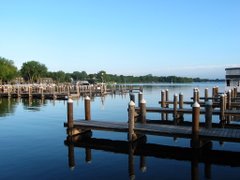
Lakeshore owners have a strong affinity for and love of the lake where they live. This often translates into advocacy and action for preserving, protecting and improving the lake environment – a good thing. Unfortunately, this may also viewed as an indication that lakeshore owners really think it is ‘their’ lake. Or even worse, many think lakeshore owners want and expect ‘their’ lake to become their ‘private’ lake.
I say ‘their lake’ because most lakeshore owners say this, not in the sense they actually own it, rather in the sense that they take ownership in the welfare of the lake.
The position of the Lake Minnetonka Association is that Lake Minnetonka is a public resource for all to enjoy. Lake Minnetonka, as well as many lakes in Minnesota, benefit from lakeshore owners’ sense of ownership because lakeshore owners make significant investments in protecting and managing ‘their’ lakes.
Lakeshore owners welcome others’ use and enjoyment of Lake Minnetonka, but they also expect the same high level of caring and stewardship from visitors as lakeshore owners themselves.
Unfortunately, fingers often point both ways. Lake visitors point to shoreland modification, excessive weed and aquatic plant removal and large docks. Lakeshore owners point to excessive noise and speed, introduction of exotic species and sometimes rude or obnoxious behavior. Certainly, improvements can be made on both sides, but let us not forget Lake Minnetonka belongs to us all and its care ought to be borne by us all.
The Lake Minnetonka Association, on behalf of lakeshore owners, has been an unapologetic advocate for the highest level of protection and management for Lake Minnetonka. We believe aquatic invasive species (AIS) have harmed the lake and additional AIS will add to the damage. It is a reality that when AIS are introduced into a lake, it is there forever. From lakeshore owners’ perspective, AIS are brought to the lake from a visitor who can come and go, but the impacts are seen and experienced every day by lakeshore residents. From a lake users’ perspective, suggestions to control or restrict their access to minimize the threat of an AIS introduction is seen as a way to keep them out. While neither view is totally accurate, these opposing views work to keep us from addressing the underlying problems.
We must all work to see the others’ perspectives, understand the damage AIS is doing to our lakes and work to solve this huge challenge. Unfortunately, AIS exploit the way we move from lake-to-lake, and visitors move between lakes much more then lakeshore residents. So, the movement must be addressed to materially address the concern of AIS.
The better we understand and appreciate everybody’s concern for and love of this lake, and the more effort we put into finding common ground, the better, more lasting solutions will be forthcoming.
Let us (all of us) start by referring to Lake Minnetonka is ‘our’ lake – as it belongs to all of us. Then, let us think of solutions that involve all of us.
Sunday, September 18, 2011

Friday, August 19, 2011
Community Clean-Up for Water Quality
Like many of you, I’ve read Dick Osgood’s excellent postings on the problems facing Lake Minnetonka. Invasive species like milfoil choke the lake, and zebra mussels have been introduced. The options for solving the problem of invasives are complex, confusing, expensive and highly regulated. In addition to the invasive species that trouble Lake Minnetonka’s waters is the water that runs from the streets, parking lots and rooftops into the lake. Runoff carries pollutants that feed algae, turning areas of the lake green and smelly in the summer. Among the areas affected are Halsteds Bay, Stubbs Bay, West Arm and Jennings Bay on Lake Minnetonka. Fortunately, every one of us can play a role in preventing this kind of pollution from reaching the lake.
Loose soil, leaves, grass clippings and other organic materials in our storm drains play a role in why Lake Minnetonka turns green with algae. By sweeping regularly, most cities and towns do an admirable job of keeping their streets clean. But city governments can’t do it alone.
The Freshwater Society and our partner, the Friends of the Minnesota Valley, offer a program that helps you get involved in protecting healthy waters, Community Clean-Ups for Water Quality. Locally-led groups of volunteers, rake, sweep, bag and remove loose dirt and leaves blocking sewer grates on city streets, and compost the material to prevent pollutants such as phosphorus from entering the lake.
Depending on the mix of materials, for every five bags (100 pounds) of soil, leaves and other organic debris you collect, your lake association, community group, scout troop or church group can prevent up to a pound of phosphorus from entering your local lake or river. Each pound of phosphorus can cause the growth of up to 500 pounds of algae, and every little bit helps. This fall, the Freshwater Society will be working with groups throughout the Minnehaha Creek Watershed District to sponsor Community Clean-ups for Water Quality.
The Freshwater Society is looking for neighborhood groups, churches, Scout troops and other community organizations in the Lake Minnetonka area who are interested in organizing a Community Clean-Up for Water Quality this fall. Clean-Ups typically happen in late October, after the leaves fall and before the snows begin. It’s a great community service project, simple and effective. Get involved and learn how you can be part of keeping Lake Minnetonka healthy and clean.
We have assembled a toolkit to help you implement a Community Clean-Up for Water Quality in your area. For more information on Community Cleanups for Water Quality, or to download the Toolkit, visit our website- http://freshwater.org/index.php/projects/community-cleanups-for-water-quality
For more information, or to set up a cleanup in your neighborhood, contact:
Peggy Knapp
pknapp@freshwater.org
Loose soil, leaves, grass clippings and other organic materials in our storm drains play a role in why Lake Minnetonka turns green with algae. By sweeping regularly, most cities and towns do an admirable job of keeping their streets clean. But city governments can’t do it alone.
The Freshwater Society and our partner, the Friends of the Minnesota Valley, offer a program that helps you get involved in protecting healthy waters, Community Clean-Ups for Water Quality. Locally-led groups of volunteers, rake, sweep, bag and remove loose dirt and leaves blocking sewer grates on city streets, and compost the material to prevent pollutants such as phosphorus from entering the lake.
Depending on the mix of materials, for every five bags (100 pounds) of soil, leaves and other organic debris you collect, your lake association, community group, scout troop or church group can prevent up to a pound of phosphorus from entering your local lake or river. Each pound of phosphorus can cause the growth of up to 500 pounds of algae, and every little bit helps. This fall, the Freshwater Society will be working with groups throughout the Minnehaha Creek Watershed District to sponsor Community Clean-ups for Water Quality.
The Freshwater Society is looking for neighborhood groups, churches, Scout troops and other community organizations in the Lake Minnetonka area who are interested in organizing a Community Clean-Up for Water Quality this fall. Clean-Ups typically happen in late October, after the leaves fall and before the snows begin. It’s a great community service project, simple and effective. Get involved and learn how you can be part of keeping Lake Minnetonka healthy and clean.
We have assembled a toolkit to help you implement a Community Clean-Up for Water Quality in your area. For more information on Community Cleanups for Water Quality, or to download the Toolkit, visit our website- http://freshwater.org/index.php/projects/community-cleanups-for-water-quality
For more information, or to set up a cleanup in your neighborhood, contact:
Peggy Knapp
pknapp@freshwater.org
Thursday, August 18, 2011
Due Diligence
The Lake Minnetonka Association (LMA) receives concerns from time to time about supporting the use of chemicals for controlling milfoil in Lake Minnetonka. Recently, an anonymous person commented:
“While we do believe the LMA has done a good job to mitigate these risks (e.g., concentration levels, application, etc.), we'd prefer to avoid the use of chemicals altogether...at least until consensus can be gained on the risks. Until then, I think we owe to ourselves to do the research and make informed decisions on what risks are acceptable.”
The LMA has done our due diligence. More research on acceptable risks may sound good, but in my experience this request is usually a stalling tactic. We do not need more research on the safety of these products. Here is why I think that.
First of all, the chemical products that are used in the milfoil control program are registered for use by the United States Environmental Protection Agency, which conducts extensive research before allowing any herbicide to be allowed for use. In addition, the herbicides are permitted by the Minnesota Department of Natural Resources.
Suggesting that the LMA or any local organization ‘do research’ is unrealistic. The investment in and thoroughness of the testing for the chemical triclopyr, the main herbicide used in the milfoil control project, has been supported by:
· Over 180 peer-reviewed scientific reports and technical documents on file with the US EPA.
· Over $100 million dollars have been invested in development and scientific regulatory studies to meet data requirements of US EPA herbicide registration.
· The US EPA uses these assessments in their evaluation process: Residue Chemistry Data, Environmental Fate Data, Degradation Studies, Metabolism Studies, Mobility Studies, Dissipation Studies, Accumulation Studies, Hazard to Humans and Domestic Animals, and Teratogenicity Studies, Mutagenicity Studies.
The US EPA requires these studies to assure there are acceptable risks to human health and the environment. The US EPA criteria are:
· An acceptable toxicity level for humans is defined as the level of pesticide present in fish or water in which a lifetime of human consumption is not likely to cause adverse health effects in humans.
· Environmental tolerance levels are determined to have “no observable effects” in animal diets and quantification of residues in fish and water.
The LMA (or any other local or state agency) does not have sufficient resources to do a credible, objective job over-and-above what has already been done. Indeed, we would submit no additional tests or research are needed.
The LMA believes that there are no other feasible (non-chemical) control options that accomplish our management goals, which are to control milfoil in a safe manner without harming native plants.
Selective hand-pulling of milfoil, which we know can be very effective, is not feasible. Waterfront Restoration offers hand-pulling milfoil control services. Their owner, Tom Suerth, estimated costs between $6,500 and $17,400 per acre for this service. This compares to less than $500 per acre for herbicide control. Selective hand-pulling is very effective and many lakeshore owners value this service, but it is cost-prohibitive for larger-scale projects.
Similarly using milfoil weevils for selective milfoil control is not feasible. The Minnehaha Creek Watershed District has funded (about $5,000) a small-scale pilot project overseen by a concerned citizen. However, the Minnesota Department of Natural Resources has invested over $1.3 million dollars spanning ten years for a University of Minnesota researcher to evaluate whether milfoil weevils could be an effective milfoil biological control. That research is no longer funded as weevils did not control milfoil on any kind of operational basis. Unfortunately, the weevils are readily eaten by bluegills.
Finally, harvesters are not an alternative to selective milfoil control. The harvesters are not selective and that program is designed to facilitate navigation in critical areas and not to control milfoil.
So, the LMA believes the use of herbicide in this project is safe and there are no other feasible alternatives. We appreciate some may prefer other methods or no control at all; however, on an objective, scientific basis, we know the risk to public and environmental health is very small. The EPA uses a criterion that there be less than one chance in a million for these products to cause harm. To put this into perspective, we have a one chance in one hundred of being killed in a car accident in our lifetimes, a risk that millions of people readily accept. So, in contrast, the risk than of being harmed by aquatic herbicides is at least 10,000-times smaller.
The Lake Minnetonka Association wants Lake Minnetonka to be healthy and enjoyable for all. On balance, we believe the use of herbicides in this project represents minimal, acceptable risks.
“While we do believe the LMA has done a good job to mitigate these risks (e.g., concentration levels, application, etc.), we'd prefer to avoid the use of chemicals altogether...at least until consensus can be gained on the risks. Until then, I think we owe to ourselves to do the research and make informed decisions on what risks are acceptable.”
The LMA has done our due diligence. More research on acceptable risks may sound good, but in my experience this request is usually a stalling tactic. We do not need more research on the safety of these products. Here is why I think that.
First of all, the chemical products that are used in the milfoil control program are registered for use by the United States Environmental Protection Agency, which conducts extensive research before allowing any herbicide to be allowed for use. In addition, the herbicides are permitted by the Minnesota Department of Natural Resources.
Suggesting that the LMA or any local organization ‘do research’ is unrealistic. The investment in and thoroughness of the testing for the chemical triclopyr, the main herbicide used in the milfoil control project, has been supported by:
· Over 180 peer-reviewed scientific reports and technical documents on file with the US EPA.
· Over $100 million dollars have been invested in development and scientific regulatory studies to meet data requirements of US EPA herbicide registration.
· The US EPA uses these assessments in their evaluation process: Residue Chemistry Data, Environmental Fate Data, Degradation Studies, Metabolism Studies, Mobility Studies, Dissipation Studies, Accumulation Studies, Hazard to Humans and Domestic Animals, and Teratogenicity Studies, Mutagenicity Studies.
The US EPA requires these studies to assure there are acceptable risks to human health and the environment. The US EPA criteria are:
· An acceptable toxicity level for humans is defined as the level of pesticide present in fish or water in which a lifetime of human consumption is not likely to cause adverse health effects in humans.
· Environmental tolerance levels are determined to have “no observable effects” in animal diets and quantification of residues in fish and water.
The LMA (or any other local or state agency) does not have sufficient resources to do a credible, objective job over-and-above what has already been done. Indeed, we would submit no additional tests or research are needed.
The LMA believes that there are no other feasible (non-chemical) control options that accomplish our management goals, which are to control milfoil in a safe manner without harming native plants.
Selective hand-pulling of milfoil, which we know can be very effective, is not feasible. Waterfront Restoration offers hand-pulling milfoil control services. Their owner, Tom Suerth, estimated costs between $6,500 and $17,400 per acre for this service. This compares to less than $500 per acre for herbicide control. Selective hand-pulling is very effective and many lakeshore owners value this service, but it is cost-prohibitive for larger-scale projects.
Similarly using milfoil weevils for selective milfoil control is not feasible. The Minnehaha Creek Watershed District has funded (about $5,000) a small-scale pilot project overseen by a concerned citizen. However, the Minnesota Department of Natural Resources has invested over $1.3 million dollars spanning ten years for a University of Minnesota researcher to evaluate whether milfoil weevils could be an effective milfoil biological control. That research is no longer funded as weevils did not control milfoil on any kind of operational basis. Unfortunately, the weevils are readily eaten by bluegills.
Finally, harvesters are not an alternative to selective milfoil control. The harvesters are not selective and that program is designed to facilitate navigation in critical areas and not to control milfoil.
So, the LMA believes the use of herbicide in this project is safe and there are no other feasible alternatives. We appreciate some may prefer other methods or no control at all; however, on an objective, scientific basis, we know the risk to public and environmental health is very small. The EPA uses a criterion that there be less than one chance in a million for these products to cause harm. To put this into perspective, we have a one chance in one hundred of being killed in a car accident in our lifetimes, a risk that millions of people readily accept. So, in contrast, the risk than of being harmed by aquatic herbicides is at least 10,000-times smaller.
The Lake Minnetonka Association wants Lake Minnetonka to be healthy and enjoyable for all. On balance, we believe the use of herbicides in this project represents minimal, acceptable risks.
Wednesday, July 20, 2011
Who Should Manage Lake Minnetonka's Weeds?
In a recent column, I argued it is time for a comprehensive management plan for managing aquatic plants (nuisance plants, invasive plants and native plants) for Lake Minnetonka. Here I use ‘weeds’ as a familiar term to most people, however, I am referring all plants – those that might require control, those that require protection and the balance between the two.
At this time, we know several things that compel use to be forthright and strategic:
• Milfoil is a scourge that can be controlled on a bay-wide basis
• Flowering rush has the potential to become problematic lake-wide
• New invasive plants are nearing Lake Minnetonka – hydrilla, Brazilian waterweed, etc.
• Native plants are abundant and important to protect
• There has never been a comprehensive plant management plan or program for Lake Minnetonka
• All past and current management efforts have been implemented piecemeal
• The desire to control invasive plants is heard lake-wide
We have tended to focus on milfoil, but we need a plan that is broadly focused on all aspects of plant control and protection. However, even our milfoil programs can be improved.
Many aspects of the plant management programs now in place are lacking. Milfoil is a huge problem and the harvesters cut a small portion on a schedule out of sync with the boating season. The newest invasive plant, Flowering rush, has been largely ignored since its discovery three years ago – it continues to spread with no agency monitoring its spread much less attempting to contain it. No agency has taken the lead in managing plants in the lake – rather it is left to a hodgepodge of individuals and several organizations and agencies.
Improvements can be made. While not yet complete, the five-bay milfoil program has demonstrated the use of selective herbicides as a safe, viable tool. Indeed, the most recent treatments to four bays (Grays has not yet been treated this season) have shown milfoil to be substantially gone and many native plants remain healthy. On a per acre basis, these herbicide treatments are comparable in cost to the harvesting program – plus herbicides control milfoil early in the season and lasts for multiple seasons. This compares to the harvesters, which do not get to many areas of the lake until late in the season, require the ownership and maintenance of capital assets, kill thousands of fish and generate milfoil fragments for lakeshore owners to clean up. While there may be a role of harvesters in a comprehensive approach, new harvester technologies do not address these concerns.
So who should be in charge of managing plants in Lake Minnetonka? The Lake Minnetonka Association believes the Minnehaha Creek Watershed District (MCWD) is best suited to this critical task.
The MCWD is a local water resource management organization that has the required technical expertise, funding capacity and mission for this important task. As well, the MCWD is guided by sound ecological principals in its management plan, so it clearly has the capacity to balance the overall health of the lake with the desires to control nuisance and invasive plants to facilitate recreation.
Other watershed districts in Minnesota have assumed these responsibilities. For example, the Pelican River Watershed District manages invasive plants in the lakes in their district. Their program is paid for by a small levy to properties in the watershed.
The Lake Minnetonka Conservation District (LMCD) would appear to have a sufficient charter, but has never really embraced a comprehensive approach to managing plants. Indeed, the LMCD’s harvesting program’s main objective is to facilitate navigation and it is questionable to what extent this is accomplished as no program evaluation has ever been conducted. In addition, the LMCD lacks technical staff and does not have the fiscal capacity to enlarge its already small program – the harvester program cuts about 300 acres per season compared to an estimated 3,000 to 5,000 acres of milfoil in the lake.
The Lake Minnetonka Association has been proud to serve as project manager for the demonstration project and we are also proud of our members for providing the majority of funding for this project. However, this should not be our job in the long run. Following the completion of the five-bay milfoil demonstration project in 2012, we would expect a comprehensive aquatic plant management program to be assumed by a competent local agency. We think that job belongs to the MCWD.
At this time, we know several things that compel use to be forthright and strategic:
• Milfoil is a scourge that can be controlled on a bay-wide basis
• Flowering rush has the potential to become problematic lake-wide
• New invasive plants are nearing Lake Minnetonka – hydrilla, Brazilian waterweed, etc.
• Native plants are abundant and important to protect
• There has never been a comprehensive plant management plan or program for Lake Minnetonka
• All past and current management efforts have been implemented piecemeal
• The desire to control invasive plants is heard lake-wide
We have tended to focus on milfoil, but we need a plan that is broadly focused on all aspects of plant control and protection. However, even our milfoil programs can be improved.
Many aspects of the plant management programs now in place are lacking. Milfoil is a huge problem and the harvesters cut a small portion on a schedule out of sync with the boating season. The newest invasive plant, Flowering rush, has been largely ignored since its discovery three years ago – it continues to spread with no agency monitoring its spread much less attempting to contain it. No agency has taken the lead in managing plants in the lake – rather it is left to a hodgepodge of individuals and several organizations and agencies.
Improvements can be made. While not yet complete, the five-bay milfoil program has demonstrated the use of selective herbicides as a safe, viable tool. Indeed, the most recent treatments to four bays (Grays has not yet been treated this season) have shown milfoil to be substantially gone and many native plants remain healthy. On a per acre basis, these herbicide treatments are comparable in cost to the harvesting program – plus herbicides control milfoil early in the season and lasts for multiple seasons. This compares to the harvesters, which do not get to many areas of the lake until late in the season, require the ownership and maintenance of capital assets, kill thousands of fish and generate milfoil fragments for lakeshore owners to clean up. While there may be a role of harvesters in a comprehensive approach, new harvester technologies do not address these concerns.
So who should be in charge of managing plants in Lake Minnetonka? The Lake Minnetonka Association believes the Minnehaha Creek Watershed District (MCWD) is best suited to this critical task.
The MCWD is a local water resource management organization that has the required technical expertise, funding capacity and mission for this important task. As well, the MCWD is guided by sound ecological principals in its management plan, so it clearly has the capacity to balance the overall health of the lake with the desires to control nuisance and invasive plants to facilitate recreation.
Other watershed districts in Minnesota have assumed these responsibilities. For example, the Pelican River Watershed District manages invasive plants in the lakes in their district. Their program is paid for by a small levy to properties in the watershed.
The Lake Minnetonka Conservation District (LMCD) would appear to have a sufficient charter, but has never really embraced a comprehensive approach to managing plants. Indeed, the LMCD’s harvesting program’s main objective is to facilitate navigation and it is questionable to what extent this is accomplished as no program evaluation has ever been conducted. In addition, the LMCD lacks technical staff and does not have the fiscal capacity to enlarge its already small program – the harvester program cuts about 300 acres per season compared to an estimated 3,000 to 5,000 acres of milfoil in the lake.
The Lake Minnetonka Association has been proud to serve as project manager for the demonstration project and we are also proud of our members for providing the majority of funding for this project. However, this should not be our job in the long run. Following the completion of the five-bay milfoil demonstration project in 2012, we would expect a comprehensive aquatic plant management program to be assumed by a competent local agency. We think that job belongs to the MCWD.
New AIS Laws
Aquatic invasive species commanded some attention at the legislature this past session. The Governor, with the support of the Minnesota Department of Natural Resources proposed new laws and funding early in the session – a step long-awaited.
Now, with the regular legislative session over, the policy-related elements of the AIS bills have been enacted. However, the funding elements are in limbo along with most of the rest of the state funding matters. For now, here is a summary of some of what has been enacted into law:
• All water-related equipment, including boats and bait containers, must be drained before leaving any waterbody.
• Criminal citations may be issued for violations of laws pertaining to the transport of aquatic vegetation or failure to comply with the drain plug law.
• Watercraft owners must obtain and display an AIS sticker provided by the DNR.
• Authorized inspectors can now visually and tactically inspect watercraft.
• Inspections now include removal, drainage, decontamination or treatment to prevent the transportation and spread of AIS.
• Authorized inspectors may prohibit the launching of watercraft if the owner refuses an inspection or does not remove and dispose of aquatic vegetation prior to launching.
• Refusing an inspection or a removal order may result in a civil citation and the suspension of the watercraft license for a year.
The Governor’s proposal also included additional funding for AIS as well as increased penalties. Various funding sources had been included in the House and Senate versions, but all funding bills were vetoed by the Governor. I would expect once the budget impasse is resolved, some additional AIS funding will be provided to support the policy bills. What were not included in any of the legislative versions (but had been included in the original policy bill) however, were the increased penalties. The Lake Minnetonka Association has recommended increased penalties are critical for an effective AIS prevention program – so this is a disappointment.
So, what does this mean?
First of all, we are grateful the Governor, Legislature and the DNR are taking the AIS concerns seriously and have finally taken a significant step to improve the overall AIS management system. DNR Commissioner Landwehr, in the press conference announcing the Governor’s AIS proposal, said he knew the proposal did not go as far as many people would like. And, I suppose that will always be the case due to the nature of the AIS Aquademic. That day, we were reminded by a stakeholder involved in the process, “Let’s not let perfect get in the way of good.”
Secondly, we can expect the continued spread of AIS to lakes in Minnesota as well as into Lake Minnetonka. I think that spread will now be somewhat slower, but how much slower is uncertain.
Thirdly, we should be grateful for this step, but we must also remain vigilant. There will be more inspectors on Lake Minnetonka this year – good news. However, a significant focus for the inspectors will be on outgoing boats – good news for other Minnesota lakes. In addition, many of the Lake Minnetonka inspectors will not be ‘DNR authorized’ so they will not have the authority to prohibit the launching of AIS-infested boats or boat refusing an inspection – bad news.
Fourthly, many of the new authorities will require active and aggressive enforcement to be effective. Recently, the enforcement of AIS laws has been minimal, so we hope enforcement actions will pick up the pace along with these new laws and authorities.
Finally, a significant state-wide focus will be on zebra mussels, which makes sense from the state’s perspective. Unfortunately, now that zebra mussels are in Lake Minnetonka, we will not benefit from the extra attention. Indeed, we remain exposed to additional AIS like quagga mussels, spiny waterflea, VHS, hydrilla, etc.
We are all going to have to remain on guard. The new laws will help and we are grateful. The DNR Commissioner is correct, there can never be enough; although we think the balance remains tipped in favor of AIS.
Now, with the regular legislative session over, the policy-related elements of the AIS bills have been enacted. However, the funding elements are in limbo along with most of the rest of the state funding matters. For now, here is a summary of some of what has been enacted into law:
• All water-related equipment, including boats and bait containers, must be drained before leaving any waterbody.
• Criminal citations may be issued for violations of laws pertaining to the transport of aquatic vegetation or failure to comply with the drain plug law.
• Watercraft owners must obtain and display an AIS sticker provided by the DNR.
• Authorized inspectors can now visually and tactically inspect watercraft.
• Inspections now include removal, drainage, decontamination or treatment to prevent the transportation and spread of AIS.
• Authorized inspectors may prohibit the launching of watercraft if the owner refuses an inspection or does not remove and dispose of aquatic vegetation prior to launching.
• Refusing an inspection or a removal order may result in a civil citation and the suspension of the watercraft license for a year.
The Governor’s proposal also included additional funding for AIS as well as increased penalties. Various funding sources had been included in the House and Senate versions, but all funding bills were vetoed by the Governor. I would expect once the budget impasse is resolved, some additional AIS funding will be provided to support the policy bills. What were not included in any of the legislative versions (but had been included in the original policy bill) however, were the increased penalties. The Lake Minnetonka Association has recommended increased penalties are critical for an effective AIS prevention program – so this is a disappointment.
So, what does this mean?
First of all, we are grateful the Governor, Legislature and the DNR are taking the AIS concerns seriously and have finally taken a significant step to improve the overall AIS management system. DNR Commissioner Landwehr, in the press conference announcing the Governor’s AIS proposal, said he knew the proposal did not go as far as many people would like. And, I suppose that will always be the case due to the nature of the AIS Aquademic. That day, we were reminded by a stakeholder involved in the process, “Let’s not let perfect get in the way of good.”
Secondly, we can expect the continued spread of AIS to lakes in Minnesota as well as into Lake Minnetonka. I think that spread will now be somewhat slower, but how much slower is uncertain.
Thirdly, we should be grateful for this step, but we must also remain vigilant. There will be more inspectors on Lake Minnetonka this year – good news. However, a significant focus for the inspectors will be on outgoing boats – good news for other Minnesota lakes. In addition, many of the Lake Minnetonka inspectors will not be ‘DNR authorized’ so they will not have the authority to prohibit the launching of AIS-infested boats or boat refusing an inspection – bad news.
Fourthly, many of the new authorities will require active and aggressive enforcement to be effective. Recently, the enforcement of AIS laws has been minimal, so we hope enforcement actions will pick up the pace along with these new laws and authorities.
Finally, a significant state-wide focus will be on zebra mussels, which makes sense from the state’s perspective. Unfortunately, now that zebra mussels are in Lake Minnetonka, we will not benefit from the extra attention. Indeed, we remain exposed to additional AIS like quagga mussels, spiny waterflea, VHS, hydrilla, etc.
We are all going to have to remain on guard. The new laws will help and we are grateful. The DNR Commissioner is correct, there can never be enough; although we think the balance remains tipped in favor of AIS.
Monday, May 16, 2011
Zebra Mussel's Ugly Cousin
We were all disappointed last summer to learn of the discovery of zebra mussels in Lake Minnetonka. After a decade of warning that we were inadequately protected, zebra mussels invaded our lake. Now, Lake Minnetonka, along with Gull Lake, Prior Lake, the Alexandria Chain of Lakes and Mille Lacs Lake, are ‘super-spreaders’ and I would not be surprised if ten additional lakes have zebra mussels discovered this year.
Lake Minnetonka and all of Minnesota’s lakes remain under-protected.
We have yet to realize the full impacts of zebra mussel in Lake Minnetonka. I expect substantial increases in the zebra mussel population over the next two or three years. All hard surfaces will be coated with zebra mussels, shells will wash up on lakeshores, fish habitat will be degraded, water clarity could increase, milfoil growth will expand – it will be a headache we will have to learn to cope with.
So what could be worse?
Let me introduce zebra mussel’s ugly cousin, the quagga mussel. The quagga mussel is related to the zebra mussel, but its impacts will be more severe. The quagga mussel can grow on all surfaces, including muck, wood and vegetation, which are extensive in Lake Minnetonka. The quagga mussel grows in deeper water than zebra mussel. The quagga mussel reproduces throughout the open water season, whereas the zebra mussel reproduces only in mid-summer. In lakes where both mussels have been introduced, the quagga mussel takes over. As bad as zebra mussel will become, the quagga mussel will be worse.
Here is the issue – despite these being two distinct species mussel genus with different, severe impacts, the Minnesota Department of Natural Resources has classified these as the same animal.
Now that Lake Minnetonka has zebra mussel, more protection efforts are being focused on boats leaving the lake to help keep zebra mussel from spreading, meaning less attention will be spent on boats entering Lake Minnetonka. Because zebra and quagga mussel are classified as the same animal, the quagga mussel is not recognized as a separate threat.
Lacking this official distinction, inspectors and others may let down their guard for this new invader.
The quagga mussel has been in Lake Pepin and the Duluth-Superior Harbor and since 2006 and in the Mississippi River at Winona since 2005. Because the quagga mussel is not recognized by our regulatory programs to be different than the zebra mussel, Lake Minnetonka is inadvertently exposed. This oversight will, I fear, lead to a second wave of devastating mussels in Lake Minnetonka and across Minnesota.
It is tragic how we are learning of all the protection methods that are not effective – voluntary compliance, miniscule fines, minimal enforcement, practically non-existent oversight of angling tournaments and special events – if we really want to protect our lakes, we should be as aggressive with our protection actions as invasive species are in exploiting our ineffective protection measures.
Unfortunately, we now know the protections we had for Lake Minnetonka were not adequate. Because these protections have not improved, we can very well expect the zebra mussel’s ugly twin, the quagga mussel, is not far behind.
Lake Minnetonka and all of Minnesota’s lakes remain under-protected.
We have yet to realize the full impacts of zebra mussel in Lake Minnetonka. I expect substantial increases in the zebra mussel population over the next two or three years. All hard surfaces will be coated with zebra mussels, shells will wash up on lakeshores, fish habitat will be degraded, water clarity could increase, milfoil growth will expand – it will be a headache we will have to learn to cope with.
So what could be worse?
Let me introduce zebra mussel’s ugly cousin, the quagga mussel. The quagga mussel is related to the zebra mussel, but its impacts will be more severe. The quagga mussel can grow on all surfaces, including muck, wood and vegetation, which are extensive in Lake Minnetonka. The quagga mussel grows in deeper water than zebra mussel. The quagga mussel reproduces throughout the open water season, whereas the zebra mussel reproduces only in mid-summer. In lakes where both mussels have been introduced, the quagga mussel takes over. As bad as zebra mussel will become, the quagga mussel will be worse.
Here is the issue – despite these being two distinct species mussel genus with different, severe impacts, the Minnesota Department of Natural Resources has classified these as the same animal.
Now that Lake Minnetonka has zebra mussel, more protection efforts are being focused on boats leaving the lake to help keep zebra mussel from spreading, meaning less attention will be spent on boats entering Lake Minnetonka. Because zebra and quagga mussel are classified as the same animal, the quagga mussel is not recognized as a separate threat.
Lacking this official distinction, inspectors and others may let down their guard for this new invader.
The quagga mussel has been in Lake Pepin and the Duluth-Superior Harbor and since 2006 and in the Mississippi River at Winona since 2005. Because the quagga mussel is not recognized by our regulatory programs to be different than the zebra mussel, Lake Minnetonka is inadvertently exposed. This oversight will, I fear, lead to a second wave of devastating mussels in Lake Minnetonka and across Minnesota.
It is tragic how we are learning of all the protection methods that are not effective – voluntary compliance, miniscule fines, minimal enforcement, practically non-existent oversight of angling tournaments and special events – if we really want to protect our lakes, we should be as aggressive with our protection actions as invasive species are in exploiting our ineffective protection measures.
Unfortunately, we now know the protections we had for Lake Minnetonka were not adequate. Because these protections have not improved, we can very well expect the zebra mussel’s ugly twin, the quagga mussel, is not far behind.
A Milfoil Plan for All of Lake Minnetonka
Eurasian watermilfoil was discovered in Lake Minnetonka in 1987 – the first lake in Minnesota to have milfoil. Within a couple years, the pesky plant spread throughout the lake and has been problematic since that time – I estimate there are up to 5,000 acres of milfoil in Lake Minnetonka.
Given the scope, duration and impact of milfoil on Lake Minnetonka, it is surprising to me there has never been a comprehensive inventory of milfoil nor has there ever been a comprehensive management plan for milfoil.
There have been several milestones in collective battles to manage or control milfoil:
• 1989 – Harvesting Program began
• late-1990s to early 2000s – University of Minnesota research on milfoil weevil control
• 2006 – Milfoil Demonstration Project
• 2008 to 2012 – Milfoil Control on Carmans, Grays and Phelps Bays using herbicides
• 2011 – Gideon and St. Albans Bays added to herbicide project
A synopsis of these projects is as follows:
The harvesting program is designed to facilitate access and navigation, but not to control milfoil in the lake. The harvesting program cuts and removes about 300 acres of milfoil per season.
Weevils are native to Minnesota (and are in Lake Minnetonka) and grow on milfoil. It was hoped the weevils, if enhanced, would provide a biological control for milfoil. The weevil research of the University of Minnesota (as well as similar research around the country) did not result in any practical or operational control program, despite the expenditure of over $1,000,000. Unfortunately, sufficient weevil densities could neither be attained nor sustained - and it was discovered that bluegills preyed upon the weevils. The LMCD’s AIS Task Force has determined that weevils do not represent a viable control method for milfoil.
The 2006 demonstration project evaluated ‘selective’ herbicides in three test areas. Here, ‘selective’ refers to the ability of the herbicide product to selectively target and kill milfoil while doing minimal harm to native plants. On the basis of the positive results, the larger-scale milfoil control project was initiated.
In 2007, a Lake Vegetation Management Plan was developed to frame a milfoil control milfoil in three bays (Carmans, Grays and Phelps). The expert panel concluded that the use of selective herbicides was the only feasibly method to control milfoil and protect native plants. This project was begun in 2008 and will continue through 2012.
This year, Gideon and St. Albans Bays will be added to the herbicide project.
The Lake Minnetonka Association supports the herbicide project and believes it should be an element of a long-term, comprehensive management plan for milfoil in Lake Minnetonka.
The agencies responsible for managing milfoil on Lake Minnetonka must now take advantage of the recent knowledge gained and the high level of community interest and initiate the development of a milfoil management plan for all of Lake Minnetonka to be implemented by 2013.
Elements of a comprehensive plan should include:
• Problem assessment supported by a comprehensive lake vegetation inventory
• Stakeholder involvement and input
• Clear management goals and objectives
• A review feasible management and control alternatives
• Funding needs and sources
• A commitment to action
We have learned that private funding for controlling milfoil can be an element of this plan. However, the funding model we have developed through the milfoil control program on five bays relies too heavily on private funding, which we believe is not sustainable in the long run. Further, Lake Minnetonka is a public resource, therefore a reliable source of public funding ought to provide the majority of support for milfoil management.
The Lake Minnetonka Association is gratified the milfoil control program on the five bays has been supported by individuals, businesses and governmental agencies. We think this positive energy should now be focused on the development of a long-term milfoil management plan and program for all of Lake Minnetonka.
Given the scope, duration and impact of milfoil on Lake Minnetonka, it is surprising to me there has never been a comprehensive inventory of milfoil nor has there ever been a comprehensive management plan for milfoil.
There have been several milestones in collective battles to manage or control milfoil:
• 1989 – Harvesting Program began
• late-1990s to early 2000s – University of Minnesota research on milfoil weevil control
• 2006 – Milfoil Demonstration Project
• 2008 to 2012 – Milfoil Control on Carmans, Grays and Phelps Bays using herbicides
• 2011 – Gideon and St. Albans Bays added to herbicide project
A synopsis of these projects is as follows:
The harvesting program is designed to facilitate access and navigation, but not to control milfoil in the lake. The harvesting program cuts and removes about 300 acres of milfoil per season.
Weevils are native to Minnesota (and are in Lake Minnetonka) and grow on milfoil. It was hoped the weevils, if enhanced, would provide a biological control for milfoil. The weevil research of the University of Minnesota (as well as similar research around the country) did not result in any practical or operational control program, despite the expenditure of over $1,000,000. Unfortunately, sufficient weevil densities could neither be attained nor sustained - and it was discovered that bluegills preyed upon the weevils. The LMCD’s AIS Task Force has determined that weevils do not represent a viable control method for milfoil.
The 2006 demonstration project evaluated ‘selective’ herbicides in three test areas. Here, ‘selective’ refers to the ability of the herbicide product to selectively target and kill milfoil while doing minimal harm to native plants. On the basis of the positive results, the larger-scale milfoil control project was initiated.
In 2007, a Lake Vegetation Management Plan was developed to frame a milfoil control milfoil in three bays (Carmans, Grays and Phelps). The expert panel concluded that the use of selective herbicides was the only feasibly method to control milfoil and protect native plants. This project was begun in 2008 and will continue through 2012.
This year, Gideon and St. Albans Bays will be added to the herbicide project.
The Lake Minnetonka Association supports the herbicide project and believes it should be an element of a long-term, comprehensive management plan for milfoil in Lake Minnetonka.
The agencies responsible for managing milfoil on Lake Minnetonka must now take advantage of the recent knowledge gained and the high level of community interest and initiate the development of a milfoil management plan for all of Lake Minnetonka to be implemented by 2013.
Elements of a comprehensive plan should include:
• Problem assessment supported by a comprehensive lake vegetation inventory
• Stakeholder involvement and input
• Clear management goals and objectives
• A review feasible management and control alternatives
• Funding needs and sources
• A commitment to action
We have learned that private funding for controlling milfoil can be an element of this plan. However, the funding model we have developed through the milfoil control program on five bays relies too heavily on private funding, which we believe is not sustainable in the long run. Further, Lake Minnetonka is a public resource, therefore a reliable source of public funding ought to provide the majority of support for milfoil management.
The Lake Minnetonka Association is gratified the milfoil control program on the five bays has been supported by individuals, businesses and governmental agencies. We think this positive energy should now be focused on the development of a long-term milfoil management plan and program for all of Lake Minnetonka.
Subscribe to:
Posts (Atom)