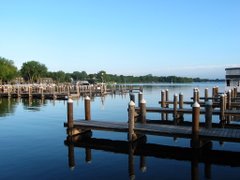
I have had the pleasure of serving as the Lake Minnetonka Association Executive Director for over 10 years. In that time, I have heard several consistent concerns from lakeshore owners, the people we represent. I have also heard several consistent myths about lakeshore owners. Over the next few months, I will present these in hopes of better understanding by all.
The most common complaint I get is about milfoil in Lake Minnetonka – lakeshore owners and most lake users do not like it.
Yes, sometimes lakeshore owners cast blame on boaters for bringing milfoil into the lake, but this is out of ongoing frustration that boaters continue to bring in aquatic invasive species (AIS), most recently zebra mussels. We understand that in the late-1980s when milfoil was brought in, there was poor awareness that this could be a problem (unlike now) and that milfoil was certainly not introduced intentionally.
Lakeshore owners are impacted by milfoil almost every day during the summer. It grows in dense mats near the shore, impeding our access to the lake. Wind, boats and harvesters cut it up and spread it, then it washes to our shores where we have to clean it up. I have heard accounts of lakeshore owners picking up dozens of wheelbarrows-full of milfoil after weekends.
We like the bay-wide milfoil treatments. Indeed, the lakeshore owners on the participating bays have paid the bulk of the treatment costs. While they have done so willingly, they do not understand why the agencies responsible for regulating and managing our lake do not pay more (maybe all) of the costs – it often rings hollow when on one hand we are told this is a public lake, but then on the other hand told it is our responsibility to pay for cleaning it up. While the Lake Minnetonka Conservation District supports this project, it has been through grants from their Save-the-Lake Fund, established from private contributions.
We are not concerned about the use of chemical herbicides to control milfoil. If these chemicals are approved for use by the U.S. Environmental Protection Agency and permitted by the Minnesota Department of Natural Resources, that is, by and large, okay by us. We get frustrated and impatient with individuals and agencies who suggest these are harmful when they have neither the capacity, expertise nor the authority to regulate these management tools. The harvesters kill fish – the herbicides do not.
We do not like the harvesters. What relief they provide for navigation is minimal and short-lived. The harvesting season, by necessity, begins when milfoil is high enough to cut (late-June); however the boating season slows down significantly after the Fourth of July. As well, the milfoil fragments generated by the harvesters are not all collected – so they float to our shores.
We would like to see and would probably support a comprehensive milfoil control plan for the lake.
We do not understand the rules for weed control. The mantra of our public agencies is that milfoil is bad for lakes; however once it gets in, we are restricted how we can control it. We understand that native plants are important for the health of the lake, but we also understand milfoil left unmanaged, harms the lake’s health. The rules for managing milfoil ought to encourage its control while at the same time protecting other, good plants. The bay-wide program is a good step toward this – we would like to see this available for the whole lake.
There are too many agencies involved in managing or regulating milfoil. The LMCD which now manages the harvesters, has funding constraints and lacks technical expertise. The Minnehaha Creek Watershed District has substantial financial resources, credible expertise and the mission to protect the health of our waters, yet they are not directly involved in managing milfoil. Invasive plant management responsibilities ought to be vested in the MCWD.
Lakeshore owners on Lake Minnetonka love this lake and want it clean and healthy for all to enjoy.
Future topics – agencies, rules and regulations, docks and boating and water quality.
Saturday, March 12, 2011

Tuesday, February 15, 2011
Piling On
After their discovery this summer, the shock of zebra mussels in Lake Minnetonka has diminished. And while the full impacts of zebra mussel in our lake are yet to come, we must now turn our attention and prevention efforts to the other aquatic invasive species (AIS) that are coming our way.
The Minnesota Invasive Species Advisory Council has identified these AIS that are in Minnesota or are expected to be in Minnesota that represent a serious threat:
Plants - Brazilian waterweed, Brittle naiad, European frog-bit, Giant salvinia, Hardy hybrid water lily, Hydrilla, Phragmites, Salt-cedar, Water chestnut, Water hyacinth, Water lettuce, Yellow iris. Animals -Asian carp (bighead, black, grass, silver), Faucet snail, Mute swan, Mystery snails (Chinese, Japanese, banded), New Zealand mud snail, Northern snakehead, Quagga mussel, Round goby, Ruffe, Rusty crayfish, Sea lamprey, Spiny waterflea. Pathogens - viral hemorrhagic septicemia (VHS).
Lake Minnetonka is already home to these unwanted invaders: Common carp, curlyleaf pondweed, Eurasian watermilfoil, Flowering rush, zebra mussel and largemouth bass virus. Of these, only two species – milfoil and curlyleaf pondweed – are even attempted to be controlled or managed.
I have worked on lake issues around the country for over thirty years and in my opinion AIS issues and their impacts to lakes represent the most profound pollution challenge we have yet seen. As bad as lake pollution concerns were in the 1960s (remember ‘Lake Erie is dead’ ?), at least these impacts were reversed. With AIS, the impacts are permanent and accumulate as each new species is added to a lake.
From the list above, three species are of immediate concern:
Spiny waterflea – a small animal (about 3/8-inch long) that has a spiny tail that clings to fishing lines, anchor ropes and other equipment. Spiny waterflea reproduces rapidly and produces eggs that are resistant to drying. In addition to being a nuisance for anglers and boaters, this animal feeds at the base of the food chain, thereby robbing fish of their food base. Spiny waterflea are in Mille Lacs Lake and Lake Minnetonka is frequently visited by boaters from Mille Lacs.
VHS – a virus that causes fish kills en masse. VHS has caused large-scale mortality in black crappie, bluegill, freshwater drum, muskellunge and yellow perch and has also been confirmed to have caused kills of smallmouth bass and walleye. VHS is transported in contaminated fish and contaminated water and equipment. VHS is in Lake Superior.
Hydrilla – an invasive plant that is so aggressive, it has been known to out-compete milfoil. Hydrilla spreads rapidly and is difficult to control. Hydrilla has been found in Wisconsin and has been established in northern Indiana.
The Lake Minnetonka Association is extremely concerned about these (and other) new AIS because:
1) Each new invasion brings its own impacts plus the combined impacts with AIS already in the lake.
2) The inspections we had on Lake Minnetonka before the discovery of zebra mussel last year were not adequate in the first place – only about a quarter of incoming boats at public launches were inspected.
3) When zebra mussels were discovered in Lake Minnetonka, a significant amount of the planned inspections for incoming boats was either discontinued or re-directed to outgoing boats, leaving Lake Minnetonka more exposed.
4) We had become so focused on preventing zebra mussel that we had minimized the threat of other new AIS.
As additional AIS are introduced into Lake Minnetonka, their impacts will not just be additive, they will be synergetic. Simply, this means that one plus one will not equal two, it will equal three or even more. The fancy ecological term for this is the ecosystem will have less integrity and we risk undoing many years of positive clean up. In real terms, Lake Minnetonka will become less clean and less habitable for fish and wildlife.
Like it or not, zebra mussels are here to stay, but let’s not let down our guard.
Let’s let this awful lesson guide us and compel us to protect Lake Minnetonka from the next onslaught.
The Minnesota Invasive Species Advisory Council has identified these AIS that are in Minnesota or are expected to be in Minnesota that represent a serious threat:
Plants - Brazilian waterweed, Brittle naiad, European frog-bit, Giant salvinia, Hardy hybrid water lily, Hydrilla, Phragmites, Salt-cedar, Water chestnut, Water hyacinth, Water lettuce, Yellow iris. Animals -Asian carp (bighead, black, grass, silver), Faucet snail, Mute swan, Mystery snails (Chinese, Japanese, banded), New Zealand mud snail, Northern snakehead, Quagga mussel, Round goby, Ruffe, Rusty crayfish, Sea lamprey, Spiny waterflea. Pathogens - viral hemorrhagic septicemia (VHS).
Lake Minnetonka is already home to these unwanted invaders: Common carp, curlyleaf pondweed, Eurasian watermilfoil, Flowering rush, zebra mussel and largemouth bass virus. Of these, only two species – milfoil and curlyleaf pondweed – are even attempted to be controlled or managed.
I have worked on lake issues around the country for over thirty years and in my opinion AIS issues and their impacts to lakes represent the most profound pollution challenge we have yet seen. As bad as lake pollution concerns were in the 1960s (remember ‘Lake Erie is dead’ ?), at least these impacts were reversed. With AIS, the impacts are permanent and accumulate as each new species is added to a lake.
From the list above, three species are of immediate concern:
Spiny waterflea – a small animal (about 3/8-inch long) that has a spiny tail that clings to fishing lines, anchor ropes and other equipment. Spiny waterflea reproduces rapidly and produces eggs that are resistant to drying. In addition to being a nuisance for anglers and boaters, this animal feeds at the base of the food chain, thereby robbing fish of their food base. Spiny waterflea are in Mille Lacs Lake and Lake Minnetonka is frequently visited by boaters from Mille Lacs.
VHS – a virus that causes fish kills en masse. VHS has caused large-scale mortality in black crappie, bluegill, freshwater drum, muskellunge and yellow perch and has also been confirmed to have caused kills of smallmouth bass and walleye. VHS is transported in contaminated fish and contaminated water and equipment. VHS is in Lake Superior.
Hydrilla – an invasive plant that is so aggressive, it has been known to out-compete milfoil. Hydrilla spreads rapidly and is difficult to control. Hydrilla has been found in Wisconsin and has been established in northern Indiana.
The Lake Minnetonka Association is extremely concerned about these (and other) new AIS because:
1) Each new invasion brings its own impacts plus the combined impacts with AIS already in the lake.
2) The inspections we had on Lake Minnetonka before the discovery of zebra mussel last year were not adequate in the first place – only about a quarter of incoming boats at public launches were inspected.
3) When zebra mussels were discovered in Lake Minnetonka, a significant amount of the planned inspections for incoming boats was either discontinued or re-directed to outgoing boats, leaving Lake Minnetonka more exposed.
4) We had become so focused on preventing zebra mussel that we had minimized the threat of other new AIS.
As additional AIS are introduced into Lake Minnetonka, their impacts will not just be additive, they will be synergetic. Simply, this means that one plus one will not equal two, it will equal three or even more. The fancy ecological term for this is the ecosystem will have less integrity and we risk undoing many years of positive clean up. In real terms, Lake Minnetonka will become less clean and less habitable for fish and wildlife.
Like it or not, zebra mussels are here to stay, but let’s not let down our guard.
Let’s let this awful lesson guide us and compel us to protect Lake Minnetonka from the next onslaught.
Thursday, January 20, 2011
A Gathering Storm
After years (and years and years …) of raising the aquatic invasive species (AIS) flag a disparate, but coalescing group of individuals, organizations and advocacy groups are now poised to bring the AIS threat to the fore. The Lake Minnetonka Association (LMA) is one of many voices being raised around Minnesota who are demanding more resources and action be taken to protect and manage our lakes.
It is finally beginning to feel like we have a critical mass to call attention to the fact that AIS are ruining our lakes.
Here is some of what is happening:
• The Minnehaha Creek Watershed District has proposed a plan amendment to address the AIS threat within the Minnehaha Creek watershed.
• On January 15th, the Tri-County (Hubbard, Becker and Ottertail Counties) AIS Legislative Summit was held for legislators in the Detroit Lakes area to hear from lake associations and watershed districts that something must be done to protect their lakes. Over three hundred attended.
• Prevention and control of aquatic invasive species is one of the top priorities of the Minnesota Seasonal and Recreational Property Owners. Their lobbyist will be advocating for new AIS laws and funding.
• Minnesota Waters and the Minnesota Department of Natural Resources (MN DNR) organized and hosted an expert forum in November 2010 to hear their views on how invasive plants, like milfoil, curlyleaf pondweed and Flowering rush (all in Lake Minnetonka) can be better managed and controlled. I was a co-moderator of that forum. A second follow-up forum is being planned for next month.
• The Green Lake Association (Spicer, MN) has begun a fundraising campaign to retain a legislative lobbyist and have asked other prominent lake associations to join their effort. To-date, they report having raised in excess of $15,000 from their members.
• The MN DNR has hosted a series of two stakeholder forums (completed in January 2010 and 2011). The stakeholders (including the LMA) were convened to determine the most important ideas for action. These are:
o Increase in enforcement of AIS laws.
o Increase the penalties for violation of AIS laws.
o Improve the AIS inspection process.
o Increase public awareness.
o Aide AIS actions at public accesses.
o Require lake service providers training.
o Focus on AIS super spreaders and prioritize.
o Increase funding for AIS efforts.
The Lake Minnetonka Association has played a significant role in all of these because we believe Lake Minnetonka is woefully under-protected and changes at the local and state level are needed.
It is clear that lakeshore owners’ associations are leading the way in Minnesota. In addition, some watershed districts, like Minnetonka Creek and Pelican River, are also assuming leadership roles to protect our lakes.
AIS action recommendations have recently been framed as an ‘us versus them’ scenario where lakeshore owners have been pitted against other lake users. This is unfortunate, inaccurate and unproductive as all lake users’ interests are to protect the lakes they love. This ought to be more appropriately framed as ‘us’ (all in Minnesota who love our lakes) versus ‘them’ (AIS that threaten to permanently damage our lakes).
It is now clear to a widespread and growing constituency that the status quo must be changed if we are to protect and restore our lakes.
It is finally beginning to feel like we have a critical mass to call attention to the fact that AIS are ruining our lakes.
Here is some of what is happening:
• The Minnehaha Creek Watershed District has proposed a plan amendment to address the AIS threat within the Minnehaha Creek watershed.
• On January 15th, the Tri-County (Hubbard, Becker and Ottertail Counties) AIS Legislative Summit was held for legislators in the Detroit Lakes area to hear from lake associations and watershed districts that something must be done to protect their lakes. Over three hundred attended.
• Prevention and control of aquatic invasive species is one of the top priorities of the Minnesota Seasonal and Recreational Property Owners. Their lobbyist will be advocating for new AIS laws and funding.
• Minnesota Waters and the Minnesota Department of Natural Resources (MN DNR) organized and hosted an expert forum in November 2010 to hear their views on how invasive plants, like milfoil, curlyleaf pondweed and Flowering rush (all in Lake Minnetonka) can be better managed and controlled. I was a co-moderator of that forum. A second follow-up forum is being planned for next month.
• The Green Lake Association (Spicer, MN) has begun a fundraising campaign to retain a legislative lobbyist and have asked other prominent lake associations to join their effort. To-date, they report having raised in excess of $15,000 from their members.
• The MN DNR has hosted a series of two stakeholder forums (completed in January 2010 and 2011). The stakeholders (including the LMA) were convened to determine the most important ideas for action. These are:
o Increase in enforcement of AIS laws.
o Increase the penalties for violation of AIS laws.
o Improve the AIS inspection process.
o Increase public awareness.
o Aide AIS actions at public accesses.
o Require lake service providers training.
o Focus on AIS super spreaders and prioritize.
o Increase funding for AIS efforts.
The Lake Minnetonka Association has played a significant role in all of these because we believe Lake Minnetonka is woefully under-protected and changes at the local and state level are needed.
It is clear that lakeshore owners’ associations are leading the way in Minnesota. In addition, some watershed districts, like Minnetonka Creek and Pelican River, are also assuming leadership roles to protect our lakes.
AIS action recommendations have recently been framed as an ‘us versus them’ scenario where lakeshore owners have been pitted against other lake users. This is unfortunate, inaccurate and unproductive as all lake users’ interests are to protect the lakes they love. This ought to be more appropriately framed as ‘us’ (all in Minnesota who love our lakes) versus ‘them’ (AIS that threaten to permanently damage our lakes).
It is now clear to a widespread and growing constituency that the status quo must be changed if we are to protect and restore our lakes.
Sunday, December 19, 2010
Watershed-Wide AIS Management
The Minnehaha Creek Watershed District is proposing to amend its management plan to establish an aquatic invasive species (AIS) control and management plan throughout Minnehaha Creek Watershed, which includes Lake Minnetonka. In light of discoveries of Zebra Mussels and Flowering Rush in our lake, this proposed program is aggressive, timely and needed – more AIS are coming. The Lake Minnetonka Association, which serves as the voice of Lake Minnetonka lakeshore owners and businesses, supports this idea.
The Minnehaha Creek Watershed District is best suited to this task in the watershed as they have the needed financial resources and staff scientific expertise. The District has also demonstrated an awareness of and positive actions toward the ecological stewardship of our water resources.
According to the District, preventing the introduction and spread of invasive species is imperative due to the “irreversible damage they have on our lakes and streams, plants and fish and recreational, property and commercial value of our water resources.”
Specifically, the proposed plan amendment would allow the District to conduct a rulemaking process with possibility of requiring anyone wishing to place a watercraft, dock, boat ramp or other equipment in a lake to obtain a permit. The permit could require a demonstration that such placement of boats and equipment into a lake be free of AIS. The permits could require a fee. The District plan could also establish a District-wide inspection and decontamination system. Education and outreach would be elements of the plan as well.
The proposed plan amendment makes a case for and seeks authority to implement the most extreme measures; however, the particular implementation elements would be subject to a highly public rule-making process that would follow the proposed plan’s approval. Even though the final details will need to be developed, the proposed plan frames possible future rules.
There will be challenges to this proposal, particularly regarding the ‘legality’ of charging permit fees, especially for watercraft entering lakes. The District claims to have the legal authority to implement this plan. The Minnesota Board of Water and Soil Resources, the state oversight agency for watershed districts, will make the final determination regarding the adoption of the District’s plan amendment. As well, the Attorney General’s office will be weighing in on any legal aspects of this proposal.
There may be other concerns. For example, this is a state-wide problem, so the District’s plan is out of context. If this is a state-wide problem, we challenge the state to propose and implement a comparable plan to obviate the need for District’s proposal. Until then, we like the District’s proposal.
According to Minnesota Waters in the AIS Position Paper (April 2009), AIS are referred to as an ‘aquademic’ and “The AIS management system in Minnesota is constrained by outdated laws and cultural norms ...” Further, Minnesota Waters says, “Unless we transform our approach, AIS will steadily overrun Minnesota’s lakes and rivers – with devastating results for our state’s businesses, communities and recreation.”
The Lake Minnetonka Association, Minnesota Waters and many other lake associations have been leaders in advocating for aggressive, comprehensive AIS prevention and control. The District proposed plan appears to fit this bill. We applaud the District for the leadership, courage and commitment to confront this serious threat to our lakes.
MCWD’s proposal is truly transformative and merits our communities’ consideration and support.
The Minnehaha Creek Watershed District is best suited to this task in the watershed as they have the needed financial resources and staff scientific expertise. The District has also demonstrated an awareness of and positive actions toward the ecological stewardship of our water resources.
According to the District, preventing the introduction and spread of invasive species is imperative due to the “irreversible damage they have on our lakes and streams, plants and fish and recreational, property and commercial value of our water resources.”
Specifically, the proposed plan amendment would allow the District to conduct a rulemaking process with possibility of requiring anyone wishing to place a watercraft, dock, boat ramp or other equipment in a lake to obtain a permit. The permit could require a demonstration that such placement of boats and equipment into a lake be free of AIS. The permits could require a fee. The District plan could also establish a District-wide inspection and decontamination system. Education and outreach would be elements of the plan as well.
The proposed plan amendment makes a case for and seeks authority to implement the most extreme measures; however, the particular implementation elements would be subject to a highly public rule-making process that would follow the proposed plan’s approval. Even though the final details will need to be developed, the proposed plan frames possible future rules.
There will be challenges to this proposal, particularly regarding the ‘legality’ of charging permit fees, especially for watercraft entering lakes. The District claims to have the legal authority to implement this plan. The Minnesota Board of Water and Soil Resources, the state oversight agency for watershed districts, will make the final determination regarding the adoption of the District’s plan amendment. As well, the Attorney General’s office will be weighing in on any legal aspects of this proposal.
There may be other concerns. For example, this is a state-wide problem, so the District’s plan is out of context. If this is a state-wide problem, we challenge the state to propose and implement a comparable plan to obviate the need for District’s proposal. Until then, we like the District’s proposal.
According to Minnesota Waters in the AIS Position Paper (April 2009), AIS are referred to as an ‘aquademic’ and “The AIS management system in Minnesota is constrained by outdated laws and cultural norms ...” Further, Minnesota Waters says, “Unless we transform our approach, AIS will steadily overrun Minnesota’s lakes and rivers – with devastating results for our state’s businesses, communities and recreation.”
The Lake Minnetonka Association, Minnesota Waters and many other lake associations have been leaders in advocating for aggressive, comprehensive AIS prevention and control. The District proposed plan appears to fit this bill. We applaud the District for the leadership, courage and commitment to confront this serious threat to our lakes.
MCWD’s proposal is truly transformative and merits our communities’ consideration and support.
Sunday, November 14, 2010
Lake Minnetonka - Neat
There are fewer and fewer days ice cover on Lake Minnetonka each winter. Long-term trends show that ice cover begins later and ice-off is earlier. This means fewer days per season of ice cover.
These same trends are occurring on lakes throughout the northern latitudes. According to one study which has investigated long-term trends (greater than 100 years) in ice cover, ice-on dates are later by about six days per hundred years and ice-off dates are between six and seven days earlier per hundred years. This means ice cover is almost two weeks less than it was one hundred years ago. The trends are continuing.
Most scientists, including me, attribute this to climate change, which has resulted in warmer temperatures in the northern latitudes.
For Lake Minnetonka, this means (on average) losing more than a day of ice cover each decade. In fact, in 21 of the past 30 years, Lake Minnetonka’s ice-off dates have been earlier than the long-term average ice-off date (April 15).
While longer periods of open water may be a blessing for those who enjoy summer boating activities, there are other worries to consider.
University of Minnesota scientists point out that earlier ice-off dates may disrupt fish spawning and make fish, such as walleye, less successful in recruiting young fish. As well, because more open water periods also means warmer water, many cold-water fish species may be displaced and replaced with warmer water species. These changes of course do not happen rapidly, but as these trends continue, we expect the fisheries in our lakes to be altered.
Longer ice-free periods and warmer waters also give aquatic invasive species (AIS) and edge over native plants and animals. This is a concern because AIS already have an advantage over native species – that is why they are invasive in the first place. This means they are getting help becoming even more invasive. In addition, longer ice-free periods provide more time for AIS to move about on boats and trailers each year.
Yikes - our task of keeping AIS out, minimizing their effects and mitigating their impacts gets more and more difficult.
Enjoy winter activities on Lake Minnetonka – Spring will be here all too soon.
These same trends are occurring on lakes throughout the northern latitudes. According to one study which has investigated long-term trends (greater than 100 years) in ice cover, ice-on dates are later by about six days per hundred years and ice-off dates are between six and seven days earlier per hundred years. This means ice cover is almost two weeks less than it was one hundred years ago. The trends are continuing.
Most scientists, including me, attribute this to climate change, which has resulted in warmer temperatures in the northern latitudes.
For Lake Minnetonka, this means (on average) losing more than a day of ice cover each decade. In fact, in 21 of the past 30 years, Lake Minnetonka’s ice-off dates have been earlier than the long-term average ice-off date (April 15).
While longer periods of open water may be a blessing for those who enjoy summer boating activities, there are other worries to consider.
University of Minnesota scientists point out that earlier ice-off dates may disrupt fish spawning and make fish, such as walleye, less successful in recruiting young fish. As well, because more open water periods also means warmer water, many cold-water fish species may be displaced and replaced with warmer water species. These changes of course do not happen rapidly, but as these trends continue, we expect the fisheries in our lakes to be altered.
Longer ice-free periods and warmer waters also give aquatic invasive species (AIS) and edge over native plants and animals. This is a concern because AIS already have an advantage over native species – that is why they are invasive in the first place. This means they are getting help becoming even more invasive. In addition, longer ice-free periods provide more time for AIS to move about on boats and trailers each year.
Yikes - our task of keeping AIS out, minimizing their effects and mitigating their impacts gets more and more difficult.
Enjoy winter activities on Lake Minnetonka – Spring will be here all too soon.
Tuesday, October 19, 2010
We Know What the Problems Are
The problems are: a) aquatic invasive species (AIS) hitchhike on boats and trailers and exploit new ecosystems where they are introduced, b) there is not a widespread appreciation that AIS are harmful, c) we have a culture and worldview that cannot adequately reconcile that easy and unimpeded access to and between lakes is exactly the pathway that AIS best exploit.
Unless we are collectively willing to confront these problems, new invasive plants, animals and viruses will continue to infest and damage our lakes.
AIS are harmful.
Recent reports from Prior Lake show the explosion in zebra mussels, only one year after they were discovered. Zebra mussels in Prior Lake are encrusting docks, lifts and boats as well as clogging water irrigation and boat engine cooling intakes. We also expect impacts to the lake’s ecology.
In another example, as Eurasian watermilfoil in Christmas Lake has increased, eight species of native plants have decreased.
Once we recognize that AIS really are harmful, we must confront the reality that preventing their movement requires changes in behaviors, attitudes and values - a significant cultural shift in thinking and behaving. It is human nature to wish away a problem rather than to confront it. We lack clear leadership to recognize and confront the AIS problem facing our lakes.
Even after lakes become infested, there is a tendency toward minimization, rationalization and denial. Last year, just after the discovery of zebra mussels in Prior Lake, I spoke with a homeowner to gauge their level of concern. They were not so concerned because they did not even see the zebra mussels in the lake - and they had been told that zebra mussels could even be fish food. Zebra mussels are certainly not fish food and unfortunately, we now know that zebra mussels are exploding in Prior Lake. I am afraid Lake Minnetonka faces the same fate.
We must take the AIS threats seriously and take aggressive prevention actions if we value our lakes.
We have become complacent, thinking that we are doing enough. Our protection system is largely permissive and a significant number of boaters are not even complying with current laws. The Minnesota DNR reports that extra efforts have occurred this year, especially at newly infested lakes. Intensive education, enforcement and inspections have logged 6,800 contacts at boat ramps and of these they issued over 320 warnings and about 120 citations – indicating that there is over 6% noncompliance with state laws, and that is with DNR uniformed personnel present. My personal observations on Lake Minnetonka indicate this rate of noncompliance is much higher, especially when inspectors are not present.
A large number of boaters are indeed aware of and in compliance with our AIS laws – thank you. Unfortunately, given the millions of boater trips that occur between Minnesota lakes, even a small percentage of noncompliant boaters translates into a very large risk of moving AIS.
We need even more funding, stronger laws, more enforcement and stiffer penalties. We need to take the AIS threat seriously.
We also need to profile and prioritize are prevention program.
As of this season, there are now four ‘superspreader’ lakes in Minnesota (Alexandria chain, Gull, Mille Lacs and Minnetonka) for zebra mussels. These lakes have (or soon will have) high densities of zebra mussels and large volumes of boat traffic. While increased protection efforts have occurred, they are unfortunately, still too small an effort.
Fishing tournaments and tournament participants represent a high risk category. I do not think it is a coincidence that five of the six most recently infested zebra mussel lakes (Alexandria chain, Gull, Mille Lacs, Pelican and Minnetonka) are all in the highest prize category (greater than $10,000) of permitted fishing contests in Minnesota. These lakes are also very highly visited, but many other highly visited lakes do not have zebra mussel.
I often hear criticisms of the MN DNR when the topic of protecting our lakes from AIS arises. In my experience, the DNR staff are professionals and are doing the best job possible with preventing AIS impacts, given the funding and policy constraints they must work within.
We need to ask – no expect – our elected leaders to give the DNR more resources and clear policy direction to really protect our lakes.
Unless we are collectively willing to confront these problems, new invasive plants, animals and viruses will continue to infest and damage our lakes.
AIS are harmful.
Recent reports from Prior Lake show the explosion in zebra mussels, only one year after they were discovered. Zebra mussels in Prior Lake are encrusting docks, lifts and boats as well as clogging water irrigation and boat engine cooling intakes. We also expect impacts to the lake’s ecology.
In another example, as Eurasian watermilfoil in Christmas Lake has increased, eight species of native plants have decreased.
Once we recognize that AIS really are harmful, we must confront the reality that preventing their movement requires changes in behaviors, attitudes and values - a significant cultural shift in thinking and behaving. It is human nature to wish away a problem rather than to confront it. We lack clear leadership to recognize and confront the AIS problem facing our lakes.
Even after lakes become infested, there is a tendency toward minimization, rationalization and denial. Last year, just after the discovery of zebra mussels in Prior Lake, I spoke with a homeowner to gauge their level of concern. They were not so concerned because they did not even see the zebra mussels in the lake - and they had been told that zebra mussels could even be fish food. Zebra mussels are certainly not fish food and unfortunately, we now know that zebra mussels are exploding in Prior Lake. I am afraid Lake Minnetonka faces the same fate.
We must take the AIS threats seriously and take aggressive prevention actions if we value our lakes.
We have become complacent, thinking that we are doing enough. Our protection system is largely permissive and a significant number of boaters are not even complying with current laws. The Minnesota DNR reports that extra efforts have occurred this year, especially at newly infested lakes. Intensive education, enforcement and inspections have logged 6,800 contacts at boat ramps and of these they issued over 320 warnings and about 120 citations – indicating that there is over 6% noncompliance with state laws, and that is with DNR uniformed personnel present. My personal observations on Lake Minnetonka indicate this rate of noncompliance is much higher, especially when inspectors are not present.
A large number of boaters are indeed aware of and in compliance with our AIS laws – thank you. Unfortunately, given the millions of boater trips that occur between Minnesota lakes, even a small percentage of noncompliant boaters translates into a very large risk of moving AIS.
We need even more funding, stronger laws, more enforcement and stiffer penalties. We need to take the AIS threat seriously.
We also need to profile and prioritize are prevention program.
As of this season, there are now four ‘superspreader’ lakes in Minnesota (Alexandria chain, Gull, Mille Lacs and Minnetonka) for zebra mussels. These lakes have (or soon will have) high densities of zebra mussels and large volumes of boat traffic. While increased protection efforts have occurred, they are unfortunately, still too small an effort.
Fishing tournaments and tournament participants represent a high risk category. I do not think it is a coincidence that five of the six most recently infested zebra mussel lakes (Alexandria chain, Gull, Mille Lacs, Pelican and Minnetonka) are all in the highest prize category (greater than $10,000) of permitted fishing contests in Minnesota. These lakes are also very highly visited, but many other highly visited lakes do not have zebra mussel.
I often hear criticisms of the MN DNR when the topic of protecting our lakes from AIS arises. In my experience, the DNR staff are professionals and are doing the best job possible with preventing AIS impacts, given the funding and policy constraints they must work within.
We need to ask – no expect – our elected leaders to give the DNR more resources and clear policy direction to really protect our lakes.
Monday, September 20, 2010
What Next?
Now that zebra mussels are in Lake Minnetonka to stay, we will have to learn to cope with their impacts. We have an opportunity to learn from this and make adjustments to keep new and forthcoming other aquatic invasive species (AIS) out of Lake Minnetonka. Unfortunately, zebra mussels will not be the last AIS to threaten Lake Minnetonka.
The nature of the AIS issue makes this a large challenge on many levels, but a challenge we ought to confront.
The Lake Minnetonka Association has been urging protection against zebra mussel for about ten years. Perhaps by using zebra mussel as our poster AIS, we have not given enough emphasis to other AIS nearing Lake Minnetonka. We cannot afford to let down our guard because new AIS, such as hydrilla, spiny waterflea, VHS and many more, all will damage our lake should they get in.
We have learned that current protections – local and statewide are not adequate.
According to a position paper from Minnesota Waters, a statewide advocacy organization, “ Minnesota’s response to the AIS problem has evolved over the past two decades in a piecemeal fashion. As a result, we lack a comprehensive management system, and we lack a sense of urgency.” And “We need to change the game.”
An effective AIS protection system requires both statewide and local elements.
The protections now in place are largely permissive, relying on public awareness and voluntary actions. There are laws, which are enforced somewhat, but not nearly enough. At the local level, there have been ramped up inspection efforts, but these too have not been sufficient. For example, the LMCD’s Strategic Plan says 19,000 inspection hours (per season) are needed. This season, there were approximately 4,000 hours of inspections.
The Minnesota Department of Natural Resources is hosting a series of stakeholder meetings this Autumn and the Lake Minnetonka Association has been invited to participate. A similar series of meetings occurred last year and one outcome was the new law requiring all boats to drain their water reservoirs after leaving any lake or river. Additional steps must be taken soon and our hope is these will be embraced in the upcoming legislative session.
We must recognize however, additional protection measures may be controversial or face obstacles. New funding of any kind will pose challenges in this economic climate. The Lake Minnetonka Association supports a fee system like that in place on Lake Tahoe, where boaters pay fees on two tiers – those using only Lake Tahoe and those visiting other lakes. These fees pay for inspections. For Minnesota, a version of this two-tier boat license system is being considered by the Minnehaha Creek Watershed District for possible introduction to the state legislature.
Another challenge we will encounter is there are angling and boating interests who may object to the cultural changes embodied by a more comprehensive protection system. Many individuals and groups have expressed concerns regarding the increased intrusiveness of additional laws, fees or inspections. These groups will be represented in the DNR’s stakeholder meetings and we will work to reach common understandings of the AIS challenges and impacts so we can come to consensus regarding meaningful and effective protections while allowing all Minnesotans to enjoy our lakes.
Given that several dozen new AIS have been identified by the DNR as having potential to impact Minnesota lakes, we must not let down our guard.
To do this, we must develop:
• Comprehensive protection with both state and local elements
• A systemic overhaul, rather than incremental changes
• An attitude and culture that AIS pose serious, permanent threats that must be addressed
• All Minnesotans being invested in the protection of our lakes
The Lake Minnetonka Association believes that if our local and state leaders can get on board with these guiding principles, then the details will follow. The Lake Minnetonka Association, partnering with Minnesota Waters and local leaders is prepared to offer specific recommendations.
The nature of the AIS issue makes this a large challenge on many levels, but a challenge we ought to confront.
The Lake Minnetonka Association has been urging protection against zebra mussel for about ten years. Perhaps by using zebra mussel as our poster AIS, we have not given enough emphasis to other AIS nearing Lake Minnetonka. We cannot afford to let down our guard because new AIS, such as hydrilla, spiny waterflea, VHS and many more, all will damage our lake should they get in.
We have learned that current protections – local and statewide are not adequate.
According to a position paper from Minnesota Waters, a statewide advocacy organization, “ Minnesota’s response to the AIS problem has evolved over the past two decades in a piecemeal fashion. As a result, we lack a comprehensive management system, and we lack a sense of urgency.” And “We need to change the game.”
An effective AIS protection system requires both statewide and local elements.
The protections now in place are largely permissive, relying on public awareness and voluntary actions. There are laws, which are enforced somewhat, but not nearly enough. At the local level, there have been ramped up inspection efforts, but these too have not been sufficient. For example, the LMCD’s Strategic Plan says 19,000 inspection hours (per season) are needed. This season, there were approximately 4,000 hours of inspections.
The Minnesota Department of Natural Resources is hosting a series of stakeholder meetings this Autumn and the Lake Minnetonka Association has been invited to participate. A similar series of meetings occurred last year and one outcome was the new law requiring all boats to drain their water reservoirs after leaving any lake or river. Additional steps must be taken soon and our hope is these will be embraced in the upcoming legislative session.
We must recognize however, additional protection measures may be controversial or face obstacles. New funding of any kind will pose challenges in this economic climate. The Lake Minnetonka Association supports a fee system like that in place on Lake Tahoe, where boaters pay fees on two tiers – those using only Lake Tahoe and those visiting other lakes. These fees pay for inspections. For Minnesota, a version of this two-tier boat license system is being considered by the Minnehaha Creek Watershed District for possible introduction to the state legislature.
Another challenge we will encounter is there are angling and boating interests who may object to the cultural changes embodied by a more comprehensive protection system. Many individuals and groups have expressed concerns regarding the increased intrusiveness of additional laws, fees or inspections. These groups will be represented in the DNR’s stakeholder meetings and we will work to reach common understandings of the AIS challenges and impacts so we can come to consensus regarding meaningful and effective protections while allowing all Minnesotans to enjoy our lakes.
Given that several dozen new AIS have been identified by the DNR as having potential to impact Minnesota lakes, we must not let down our guard.
To do this, we must develop:
• Comprehensive protection with both state and local elements
• A systemic overhaul, rather than incremental changes
• An attitude and culture that AIS pose serious, permanent threats that must be addressed
• All Minnesotans being invested in the protection of our lakes
The Lake Minnetonka Association believes that if our local and state leaders can get on board with these guiding principles, then the details will follow. The Lake Minnetonka Association, partnering with Minnesota Waters and local leaders is prepared to offer specific recommendations.
Subscribe to:
Posts (Atom)